
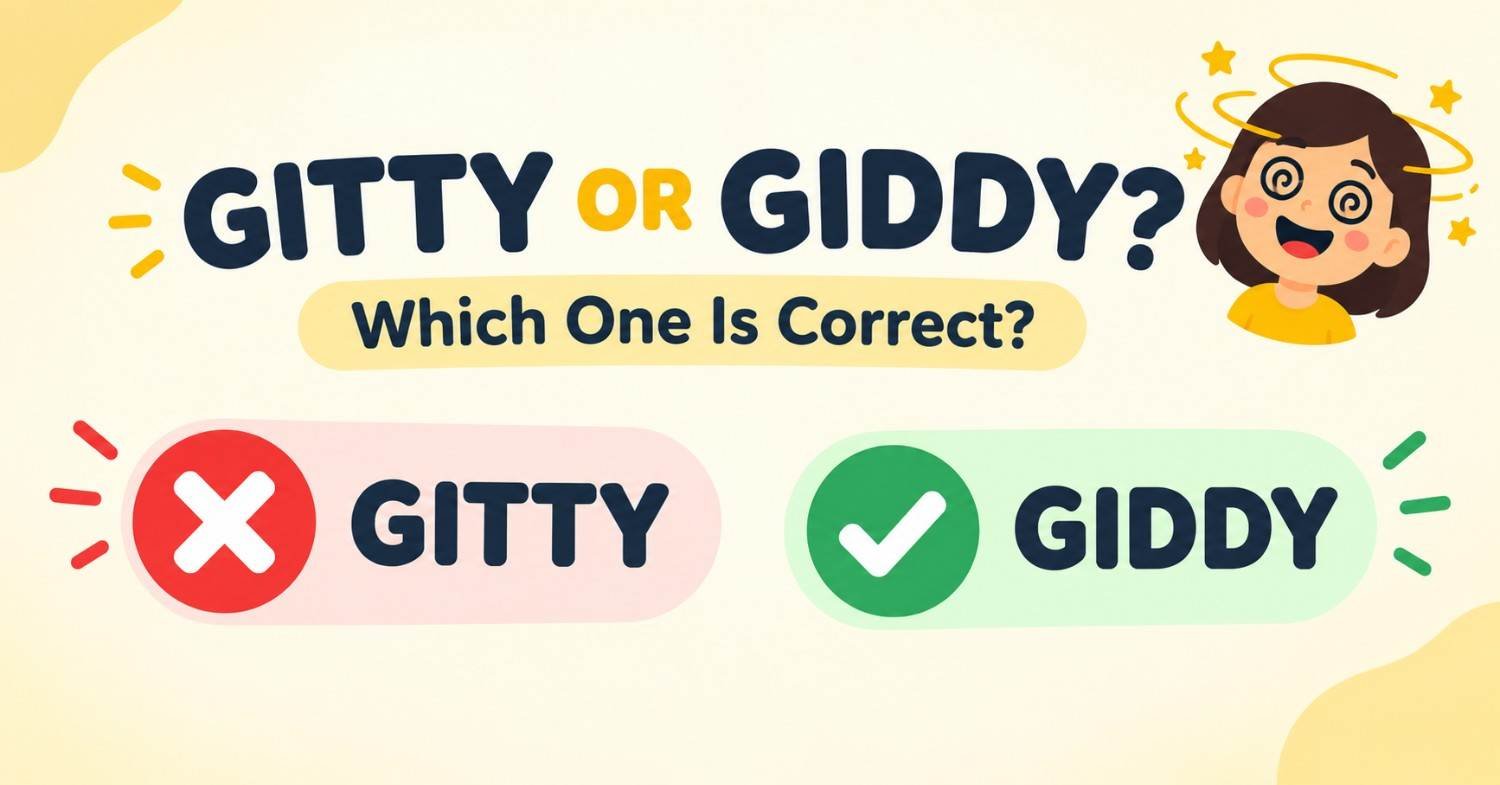
You start typing a text, write “I’m so gitty right now,” and then stop. Something looks off. That tiny pause is exactly why gitty or giddy is such a common spelling puzzle. The two words sound nearly the same out loud, so your eyes can’t always tell which one is right.
Here is the short version. Giddy is the correct spelling. Gitty is not a standard English word, and you won’t find it as an adjective in major American dictionaries like Merriam-Webster. A wrong spelling in an email, caption, or school paper can make your writing look rushed, and this particular mistake is easy to miss because it looks believable.
In this guide you’ll learn why giddy is right, what the giddy meaning covers, where the “gitty” version comes from, how giddy up vs gitty up works, which giddy synonyms fit different moods, and how to remember the spelling for good.
Gitty or Giddy: The Short Answer
If you only have a few seconds, write giddy. That is the spelling used for the adjective that means dizzy, lightheaded, or happily excited. The Cambridge Dictionary lists it the same way.
Giddy Is the Only Standard Spelling
The word has a whole family of relatives, and every one of them keeps the double d. You get giddier, giddiest, giddily, and giddiness. Nobody writes “gittiness” or “gittily,” and if you tried, a spellchecker would light up like a holiday tree.
Why So Many People Write Gitty
Three things push writers toward the wrong spelling.
- Sound. In American English, a t between two vowels often turns into a soft d sound. That is why “butter” can sound like “budder.” The same flap makes “gitty” and “giddy” sound alike.
- Pattern matching. English has plenty of words that end in tty, like pretty, witty, and kitty. Gitty seems to fit right in with them.
- Fast typing. Phones fix the error most of the time, but names, hashtags, and quick messages slip through.
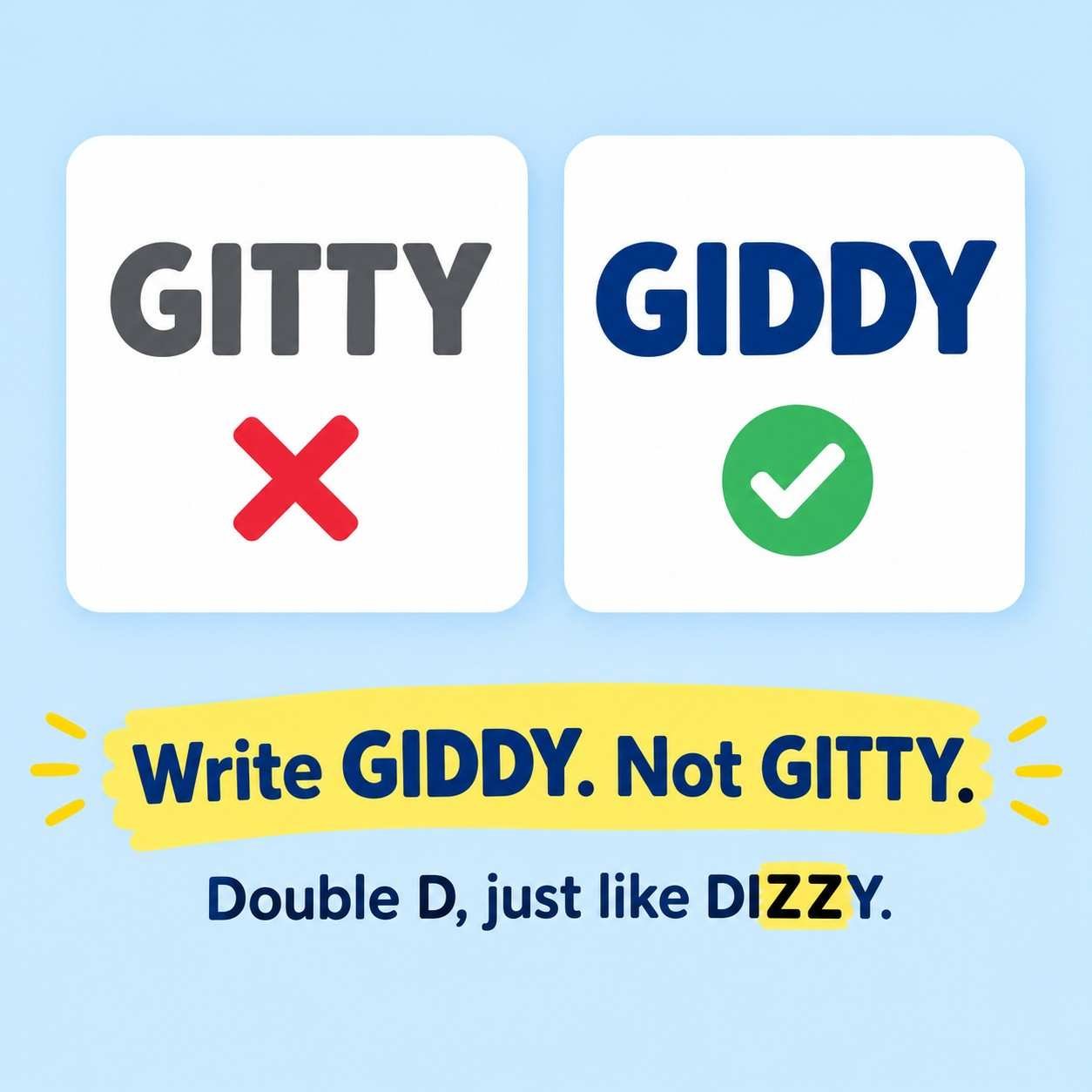
A Simple Memory Trick
Think of the word dizzy. It has a doubled letter in the middle, and so does giddy. The two words are close cousins in meaning, so let the doubled letters remind you they belong together. If you can spell dizzy, you can spell giddy.
Giddy Meaning: Definitions and Example Sentences
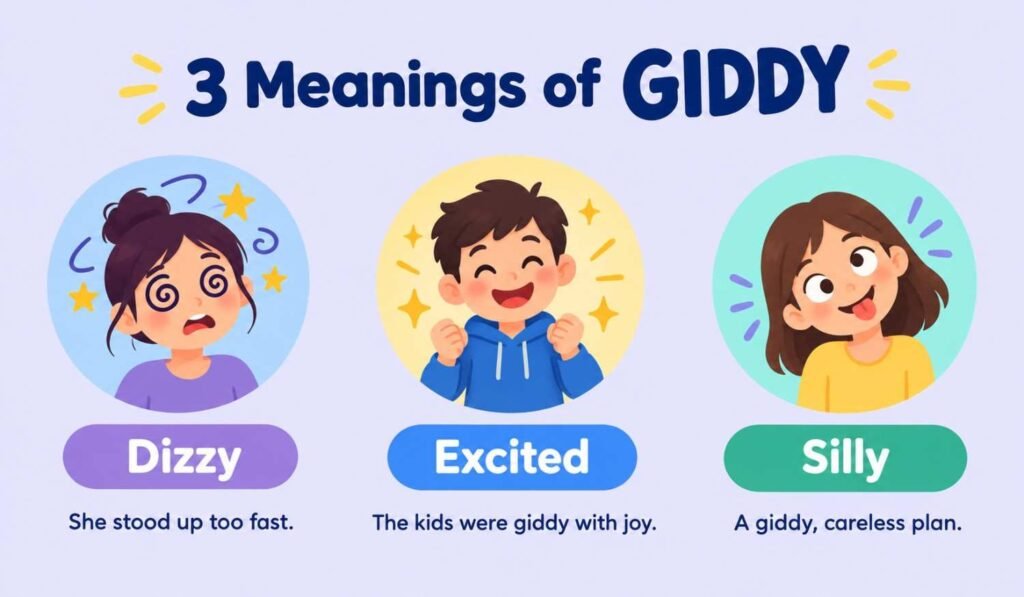
The giddy meaning is wider than most people expect. Dictionaries usually split it into a few related senses, and each one shows up in everyday writing.
Giddy as Dizzy or Lightheaded
This is the oldest sense. It describes a spinning, wobbly feeling.
- She stood up too fast and felt giddy.
- The roller coaster left him giddy and unsteady.
In casual American speech, people tend to say dizzy for the body and save giddy for mood. The physical sense is still correct, though, and it appears often in novels and in British English.
Giddy as Joyfully Excited
This is the version most Americans have in mind today. It describes a bubbly, breathless kind of happiness.
- The kids were giddy with excitement on the last day of school.
- He felt giddy when she said yes.
Notice the pattern “giddy with” followed by a feeling, such as giddy with joy, relief, or anticipation. It’s one of the most natural pairings for the word.
Giddy as Silly or Frivolous
A third meaning points to a flighty or impulsive personality.
- In her giddy youth, she changed hobbies every month.
- It was a giddy, careless decision.
This use can sound slightly old fashioned, and it often carries a mild criticism, as if the person isn’t taking things seriously.
Giddy as Causing Dizziness
Finally, the word can describe things that make you dizzy, like great heights or high speed.
- They climbed to the giddy top of the tower.
- The skater spun at a giddy pace.
The Giddy Word Family
| Form | Part of Speech | Example |
|---|---|---|
| giddy | adjective | She felt giddy with joy. |
| giddier, giddiest | comparative, superlative | He was the giddiest of them all. |
| giddily | adverb | They laughed giddily. |
| giddiness | noun | A wave of giddiness hit her. |
Where Does Gitty Come From? Is It Ever Correct?
If gitty isn’t a standard word, why does it keep appearing? There are a few reasons, and one of them is perfectly legitimate.
The Real Origin of Giddy
The word traces back to Old English, where it appeared as gidig. According to Etymonline, it once meant mad or possessed, and it is connected to an old root related to the word for god. Over the centuries the meaning softened from madness, to dizziness, to the light and happy feeling we know now. That long history shows how deeply rooted the double d is.
Gitty as a Personal Name
There is one place where Gitty is correct: as a first name. It is a familiar name in Yiddish speaking and Jewish communities, a form of Gittel, which is linked to a word meaning good. If you’re writing about someone named Gitty, spell it exactly as she does. That is a name, not a mistake.
Gitty as Casual Slang
Now and then, gitty pops up as informal slang built from the British insult “git.” It is rare and it is not a replacement for giddy. If you want to describe excitement or dizziness for an American audience, skip it.
Typos and Autocorrect Slips
Most of the time, gitty is just a typo or a spelling based on sound. Look up a phrase like “so gitty” online and you’ll mostly find casual posts where the writer meant giddy. Unless it’s a name, treat it as an error and fix it.
Giddy Up vs Gitty Up: Settling the Phrase
The spot where this mix up appears most often is the cowboy command. So let’s settle giddy up vs gitty up once and for all.
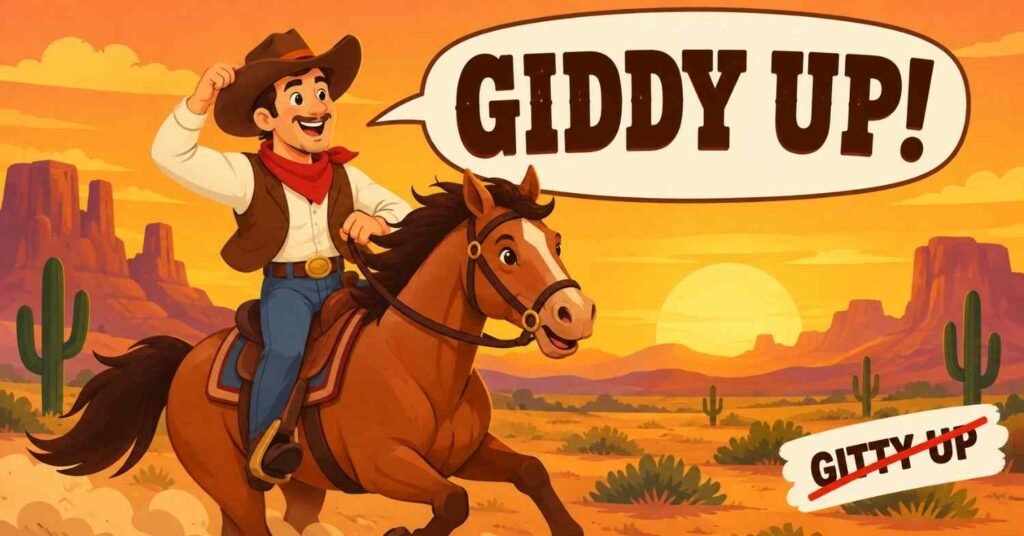
The Correct Spelling Is Giddy Up
Giddy up is a command that tells a horse to start moving or go faster. Many sources trace it back to the phrase “get up,” said quickly. The spelling follows the sound of the word giddy, so the double d matches what you hear.
Giddyup and Giddy Up
You’ll see this phrase written as two words and as one. Merriam-Webster lists the single word form, and the two word version is very common in everyday writing. Pick one style and stay consistent in your document.
- “Giddy up, Biscuit!” works well in casual dialogue.
- She shouted “giddyup” and the horse took off.
Common Misspellings to Avoid
| Incorrect | Correct | Why It Happens |
|---|---|---|
| gitty up | giddy up | Wrong t spelling |
| getty up | giddy up | Confused with the name Getty |
| gidyup | giddyup | Missing the double d |
| giddyyup | giddyup | Extra letter added |
Giddy Up in Modern Culture
The phrase has trotted far beyond the barn. People now use it to mean “let’s go,” as in “Alright team, giddy up, we have a deadline.” It also shows up in the names of rodeos, country bars, and small businesses. The spelling rule stays the same in every one of those places.
Feeling Giddy: Causes, Synonyms, and Better Word Choices
Now that the spelling is settled, let’s talk about how to use the word well, and when a different word might do a better job.
What People Mean by Feeling Giddy
When someone says they are feeling giddy, the context usually points to one of two things.
- A mood. Light, buzzy, and excited, like getting good news or starting a long awaited trip.
- A body sensation. A wobbly, spinning feeling that can come from standing up fast, skipping a meal, heat, or tiredness.
If dizziness happens often, feels severe, or has no clear cause, it’s worth speaking with a doctor. The Mayo Clinic explains common causes and when to seek help. This guide is about language, not medical advice.
Giddy Synonyms by Meaning
Picking the right synonym makes your writing sharper. Here are giddy synonyms grouped by sense.
| Sense | Synonyms | Example |
|---|---|---|
| Dizzy | lightheaded, woozy, faint, unsteady | She felt woozy after the spin. |
| Joyful | elated, euphoric, thrilled, exhilarated | He was elated by the news. |
| Playful | bubbly, carefree, jolly, lighthearted | A bubbly mood filled the room. |
| Silly | flighty, scatterbrained, frivolous | A flighty plan with no follow through. |
Antonyms of Giddy
For contrast, try sober, serious, steady, grounded, composed, or level headed. These help when you want to set two characters side by side, like a giddy sister and a composed brother.
Is Giddy Formal or Informal?
It’s flexible. Giddy works in casual chats and in polished writing, as long as the emotional sense fits. In a business email, “thrilled” often sounds a bit more professional, though “giddy with excitement” is fine in a warm, friendly message.
How to Never Misspell Giddy Again
Spelling is mostly habit. A few simple techniques can lock in the right form of gitty or giddy for good.
Memory Tricks That Work
- The dizzy link. Both words carry a doubled middle letter.
- Double d for delight. Giddy is about delight and dizziness, and both start the same way.
- The word family test. Write giddiness and the double d jumps out. There is no such thing as gittiness.
Proofreading Tips
- Search your document for gitty. Unless it is a name, swap every one for giddy.
- Keep your spellchecker on, and don’t wave away its suggestions.
- Read the sentence out loud and decide whether you mean excited, dizzy, or silly. Then confirm the spelling.
Quick Practice
Fill in the blank with the right word.
- The children were ____ with excitement (giddy).
- She shouted “____ up!” to the horse (giddy).
- He grew ____ at the edge of the cliff. (giddy)
The answer never changes, unless you are naming a person Gitty.
Conclusion
The giddy or giddy debate has a clear winner. “Giddy” is the dictionary-approved spelling for feeling dizzy, excited, or playfully silly, and it is also the only right choice in “giddy up.” Gitty belongs to personal names and the odd bit of slang.
Remember three things. Giddy is correct, and gitty is a misspelling unless it’s a name. The giddy meaning covers dizzy, joyful, and silly. And “giddy up,” or “giddyup,” is the only spelling for the horse command. Bookmark this guide, send it to a friend who keeps typing “gitty,” and next time you feel giddy, you’ll spell it right.
Frequently Asked Questions
Is it gitty or giddy?
Giddy is correct. Gitty is not a standard English word. It only appears as a name, rare slang, or a typo.
What does giddy mean?
Giddy means dizzy, lightheaded, or happily excited. It can also describe someone silly or flighty.
Is it giddy up or gitty up?
Giddy up is correct. It is a command telling a horse to move, and you can also write it as giddyup.
How do you pronounce giddy?
Say it as GID ee, with a hard g and a short i. Gitty sounds the same, which causes the mix up.
What are synonyms for giddy?
Common options include dizzy, lightheaded, elated, euphoric, thrilled, and lighthearted. Choose the one that matches the meaning you want.