
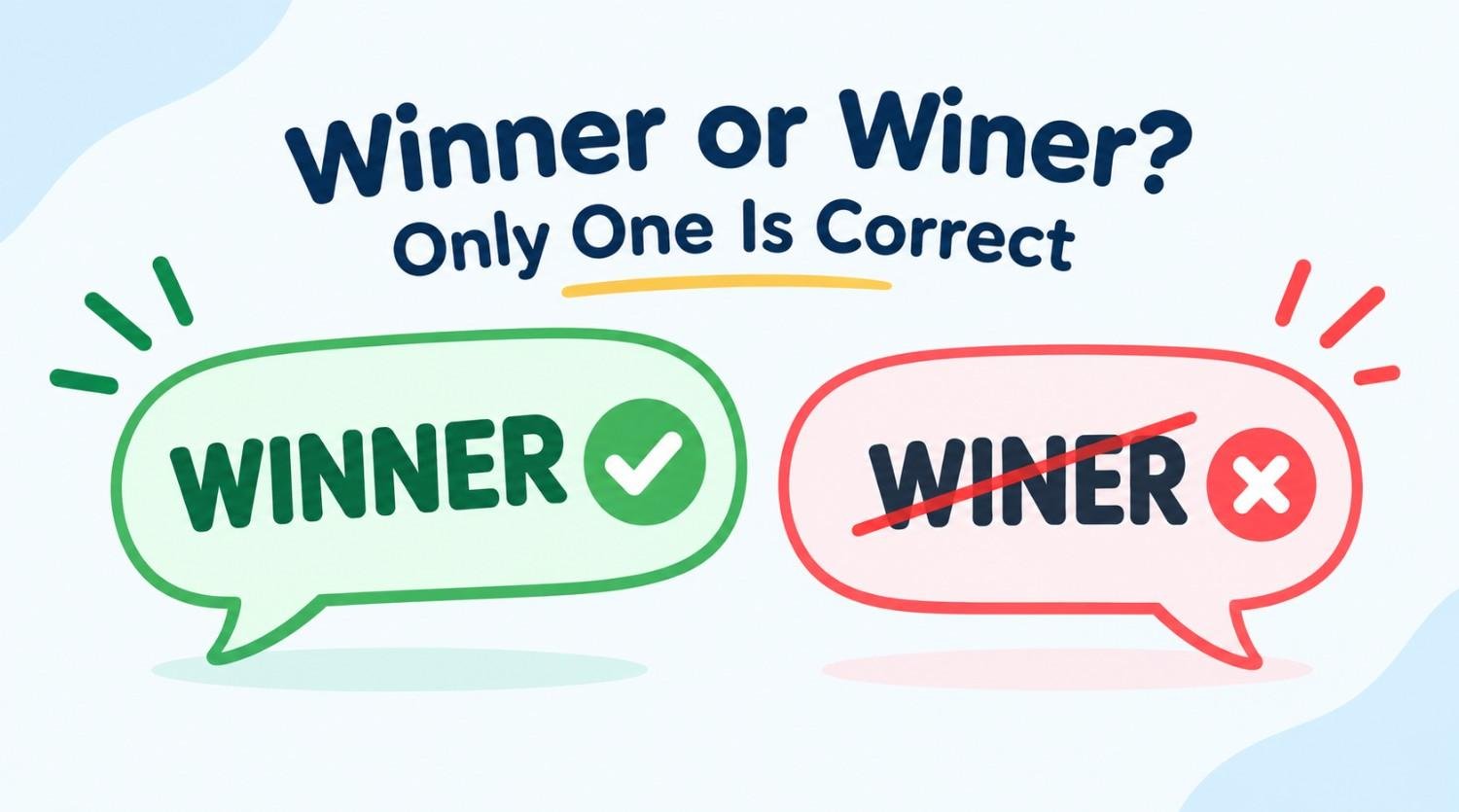
You’re mid-text, mid-caption, maybe mid-work email, and suddenly you freeze. Winner or winer? It looks wrong either way for a second. Here’s the deal, though. Winner is correct, full stop. “Winer” isn’t a real word; it’s just what happens when the sound of “winner” slips past your fingers a little too fast.
This piece walks through why that mix-up keeps happening, where the winner actually came from, and how people use it in everything from sports commentary to random group chats. By the end you’ll have a couple of tricks stuck in your head so this typo stops sneaking into your writing for good.
Winner is the only accepted spelling. It describes a person, team, or thing that comes out on top in a contest or situation. Winer shows up mostly by accident, usually because that second n gets swallowed when the word is spoken.
Why This Mix-Up Happens So Often
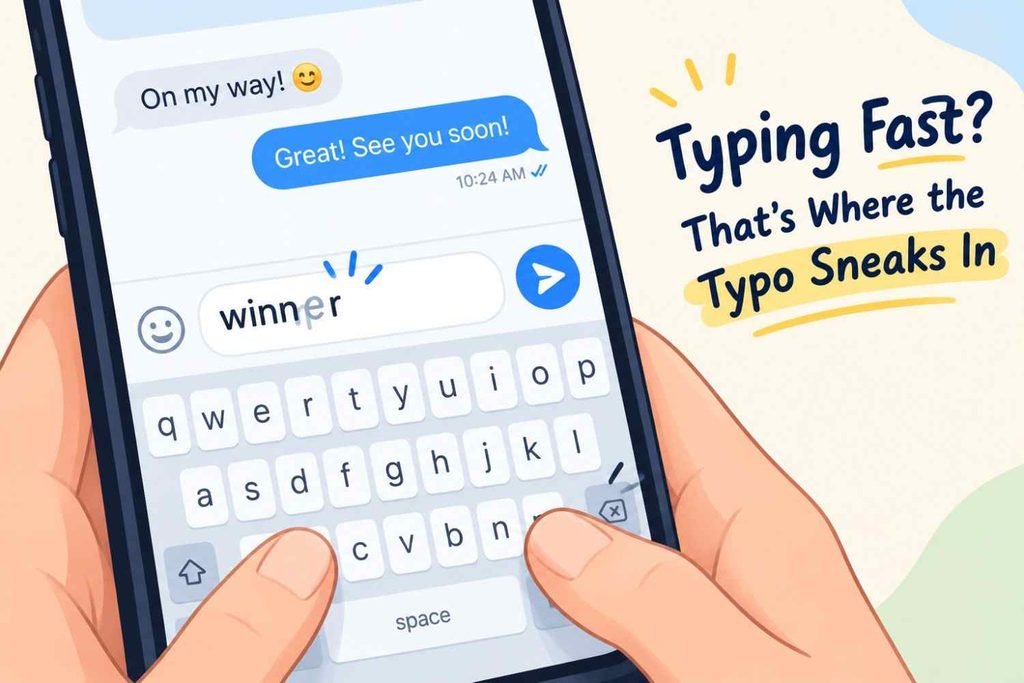
Honestly, it comes down to how the word sounds more than anything else. Say “winner” out loud a few times. That second barely registers, right? Your brain hears something closer to “win er,” and every so often your typing just follows along, especially on a phone keyboard when you’re not really thinking about it.
There’s also a spelling rule quietly working against you here. When a short word like “win” ends in one vowel followed by one consonant, English usually doubles that consonant before adding on a suffix like “er.” That’s the same reason a runner turns into a runner and a swimmer turns into a swimmer. Drop that second letter and you’ve landed on a winner without even meaning to.
Winner vs. Winner
“Winner” refers to someone or something that wins. Winer, according to the Merriam-Webster dictionary, simply doesn’t exist as a standard entry. Type it into most dictionary sites, and you’ll either get redirected straight to the winner or find a scattering of informal, nonstandard uses tied loosely to wine drinking, none of which count as accepted English.
Winner vs Wiener
This pairing causes some genuinely funny typos. A wiener is a hot dog, plain and simple. Winner has two n’s and means something entirely different: someone who came out ahead. One letter off and your sentence about a spelling bee champion accidentally becomes a sentence about lunch.
Winner vs Whiner
A whiner complains a lot, usually about small things. The winner and whiner share a similar rhythm when you say them quickly, so this slip happens occasionally too, though it’s nowhere near as common as the winner and whiner mix-up.
Where the Winner Actually Comes From
This isn’t some new internet word. The winner has roots that stretch back to Middle English, built directly from the verb “win” plus the agent suffix “er,” the exact same pattern behind “teacher,” “painter,” and “runner.” Dictionary.com’s etymology entry traces the word to somewhere around the 1300s, long before anyone was watching championship games or scrolling social feeds.
What’s kind of neat is how stable the meaning has stayed. Centuries ago a winner might have been someone who came out ahead in a physical struggle. Today it’s just as likely to describe someone who nailed a trivia night. Same core idea, wildly different context. Language sites that track spelling and etymology, including entries on Wiktionary, consistently flag the winner as one of the more commonly misspelled words in English, largely thanks to that easy-to-miss double “n.”
How People Actually Use Winner Today
On the Field or in Competition
This is the classic use everyone recognizes right away. A winner crosses the line first, scores the deciding point, or takes home the trophy. Commentators say it constantly, from little league games all the way up to global championships.
In Regular Everyday Talk
The word has stretched way past formal competition at this point. People throw it around casually all the time.
A recipe that turns out great gets called a winner.
A smart business move gets praised as a total winner.
Someone with a confident, can-do attitude might get called a winner too, just as a compliment.
In Texts and on Social Media
Online, the winner often works as quick, easy praise. A friend nails a job interview, and you text back, “You’re a winner.” Someone posts a clever life hack, and the comments fill up with “total winner.” Nobody needs the meaning explained; it’s just understood. That speed is also exactly where the winner’s typo tends to sneak in, since fast typing rarely gets a second read.

Does the Spelling Change by Region or Generation
Nope, not really. British, American, Australian, and Canadian English all spell it the exact same way, even though the pronunciation shifts a bit depending on accent. Americans tend to pronounce that final r clearly, while British speakers often soften it into more of a light vowel sound.
Generationally there’s a bit more playfulness. Younger users sometimes stretch it out for emphasis, something like “winnerrrr” in a comment for extra excitement. That’s clearly intentional, though, not the same thing as the wrong “winer” typo, which almost always happens by accident rather than for effect. Formal writing basically never touches this kind of stretching and sticks to the standard spelling every time.
A Few Ways to Never Misspell It Again
Keep both n’s in mind since win always doubles that letter before it gets added.
Slow down and say the word in your head before you type it out.
Think of a runner or swimmer, since they follow the identical pattern.
Leave autocorrect turned on for casual typing; it usually catches this one.
Give your sentence one quick read before sending anything important.
The Bottom Line
The winner is correct every single time, no exceptions. “Winer” just isn’t a real English word; it’s a slip that happens because of how quickly we speak and type the word, not because there’s any genuine debate about spelling. Once you tie the winner to that same doubling pattern found in runner and swimmer, it really does become second nature. So next time you’re celebrating a friend, describing a great idea, or just talking about who came out on top, go ahead and type winner with zero hesitation.
Frequently Asked Questions
Is “winner” a real word?
No. It’s not listed in standard English dictionaries and is simply a common misspelling of “winner,” missing its second n.
Why does “winner” have two n’s?
Because “win” ends in a single vowel and consonant, and English spelling rules double that final letter before adding “er.”
What does “winner” mean in texting?
Usually it just means something or someone impressive or worth celebrating, not necessarily tied to a real competition.
Is the spelling different in British English?
No, the spelling stays identical across British, American, Australian, and Canadian English; only the pronunciation shifts slightly.
What’s the actual difference between “winner” and “wiener”?
“Winner” means someone who wins something. Wiener is a type of sausage. They just happen to look similar in writing.