
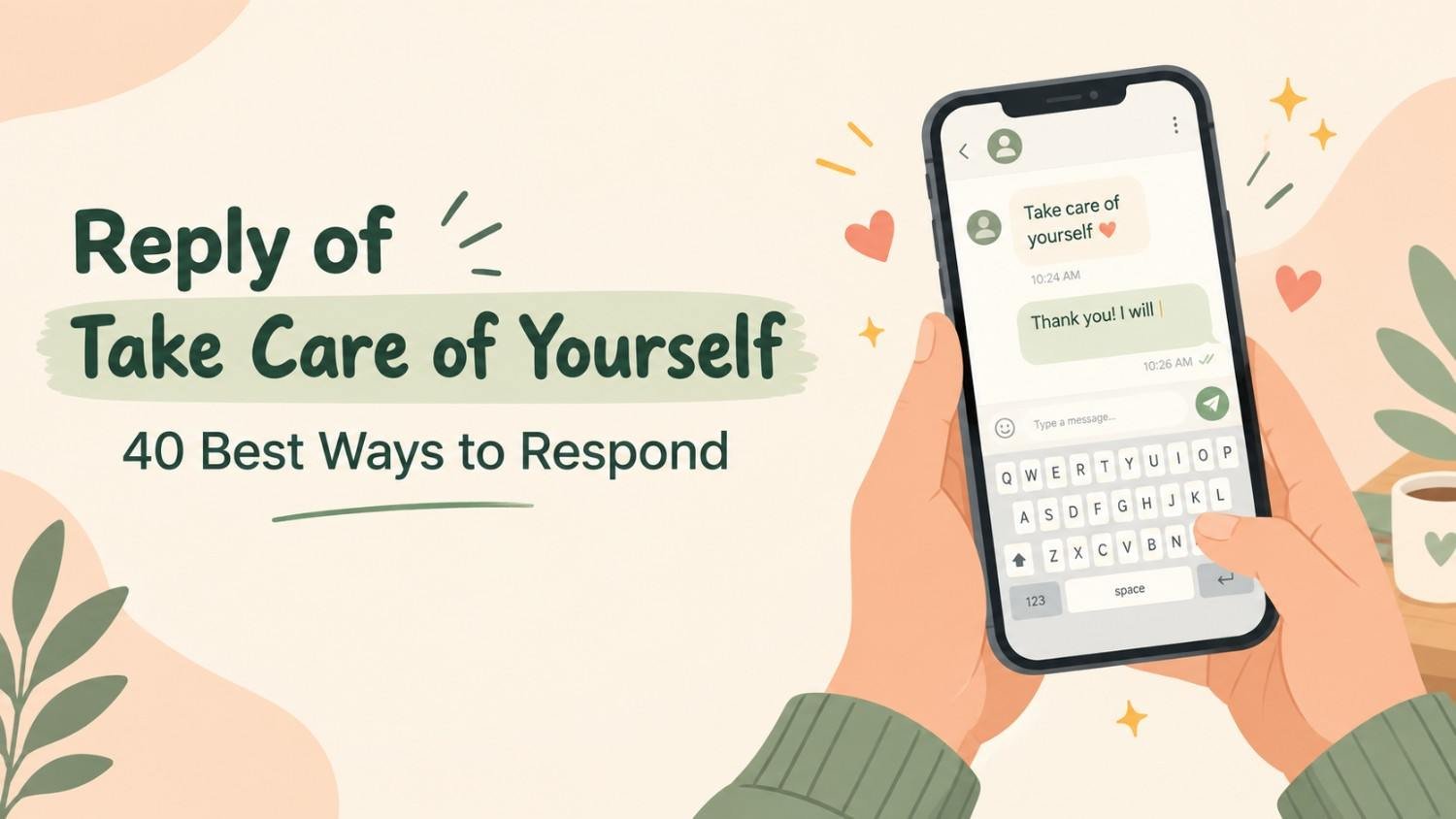
You’re wrapping up a chat, and the other person types, “Take care of yourself.” Now what? Type “you too” and you risk sounding lazy. Write a paragraph and it gets awkward fast. Most of us just stare at the screen for a second. That pause is exactly why a good reply of “take care of yourself” is worth having in your back pocket.
I’ll walk you through what the phrase means, why people use it, and how to answer in a way that fits the moment. You’ll get 40 replies you can copy for friends, family, coworkers, dates, and messy goodbyes. Take what works and skip the rest.
What Is the Best Reply to Take Care of Yourself?
The best reply of “take care of yourself” is a short and warm answer such as “Thank you, you take care too.” Use “You too” for casual chats. Use “Thank you, I will” when the moment is formal or caring.
What “Take Care of Yourself” Really Means
On the surface it’s a goodbye with a kind wish attached. The speaker hopes you stay safe and healthy until you talk again. That’s about it.
But anyone who has been on the receiving end knows the words can land differently. A grandmother says it, and your heart melts. A former boss says it after a layoff, and it stings. Same four words. Very different feeling.
Where the Phrase Comes From
Dictionary.com tracks the goodbye sense of “take care” as a casual shortening of “take care of yourself.” According to Dictionary.com, it dates to the 1960s and shows up in speech and in writing. It even replaces “Sincerely” or “Love” at the bottom of some letters and emails.
The longer version has an older feel. The site Idioms Online says the idiom has been around since at least the mid-1700s. It also points out that people often say it without much thought. It’s an offhand way to close a chat.
Other languages do something similar. Chinese speakers say 保重 (bǎozhòng) when they part ways. Japanese writers use 自愛 (jiai) in letters to wish someone good health. Wherever you go, people like to leave each other with a small wish.
That shared habit says something. Humans have always wanted a gentle way to part. A short blessing does the job without any fuss. It also leaves the door open for the next hello.
The Three Common Meanings
Nearly every use lands in one of three buckets.
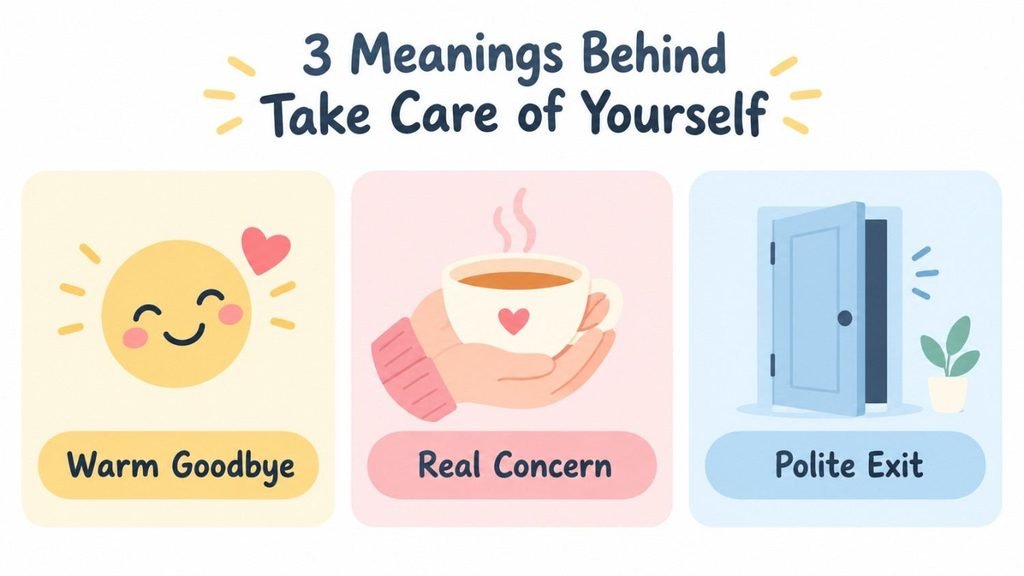
A warm goodbye. This is the everyday version. The person likes you and wants you to get home safe. Nothing hidden here.
Real concern. Maybe you’ve been sick or stressed or buried in work. Then the phrase carries weight. They want you to rest.
A polite exit. Now and then it’s a soft door closing. Idioms Online notes that “take care” on its own is sometimes said with contempt to someone the speaker never plans to see again. Think of a breakup or a fading friendship. The earlier messages usually give it away.
Why People Say “Take Care of Yourself”
Goodbyes feel abrupt. You say “bye,” and the conversation just stops. A little kindness at the end smooths that over.
It’s also pure habit. Doctors say it after appointments. Teachers say it before a long break. Coworkers type it at the bottom of emails. Because it’s so common, it rarely calls for a big answer.
Still, some people mean every word. Picture a friend who watched you struggle for a month. When she says “take care of yourself,” she is asking you to slow down. A quick “you too” can miss that. A warmer reply shows you heard her.
And plenty of people use it because it’s safe. Nobody gets offended by it. You can say it to a boss or a neighbor or the cashier. That’s why you’ll see it everywhere and why a few ready replies help.
It also helps that the phrase asks for nothing. You don’t have to explain your week or promise a call. You just answer kindly and move on with your day.
How to Read the Tone Behind the Words
Before you answer, check the vibe. A few clues make it easy.
- Warm: friendly chat beforehand with emojis or exclamation marks.
- Concerned: it follows news about illness or a rough week.
- Professional: it sits above a name and title in an email.
- Distant: the message is very short after an argument or a long silence.
- Playful: it comes with a joke or a nickname from a close pal.
Look at the whole conversation and not only the last line. A “take care” after a fun evening isn’t the same as one after a fight. Think about how this person normally writes too. Some folks are brief with everybody. Their short message may mean nothing at all.
Can’t tell? Go kind. A warm and simple reply works almost every time.
Timing counts as well. A message that shows up right after bad news feels different from one that arrives at the end of a routine call. Ask yourself what just happened before the phrase appeared. The answer usually points you to the right level of warmth.
Simple Replies That Work Every Time
Sometimes you just need something safe. These eight fit nearly any situation.
- “Thank you, you take care too.”
- “You too!”
- “Thanks, I will. You take care.”
- “Will do. Talk soon.”
- “I appreciate that. Take care.”
- “Same to you.”
- “Thank you. Stay well.”
- “Thanks a lot. Have a great day.”
If you only remember one, make it the first. It says thanks and sends the wish back. That’s the whole job.
Reply of Take Care of Yourself by Situation
You wouldn’t talk to your best friend the way you talk to your manager. Here’s how to match the moment.
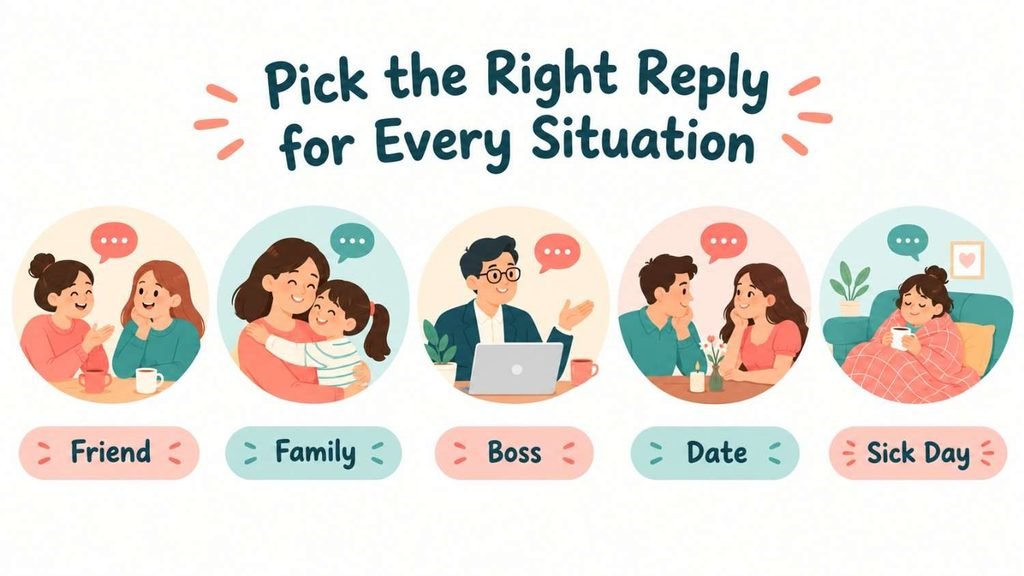
When a Friend Says It
Friends can take warmth and a little humor. Add a plan if you’d like to keep things going.
- “Aww, thanks. You take care too. Text me when you get home.”
- “Will do! Love you. Talk tomorrow.”
- “You too, my friend. Let’s catch up this weekend.”
- “Thanks, I needed that today. You take care as well.”
When Family Says It
Family often means it deeply, especially parents and grandparents. Keep your answer short and sincere.
- “Thanks, Mom. I will. Love you.”
- “I will, I promise. You take care too.”
- “Thank you. Call me if you need anything.”
- “I’ll be careful. See you soon.”
When a Boss or Coworker Says It
Stay polite and calm. No need to overshare. One friendly line in an email is plenty, since a long reply to a short note can feel odd.
- “Thank you, I appreciate that. You take care as well.”
- “Thanks so much. Have a good evening.”
- “I will. Thank you for your support this week.”
- “Thank you. Enjoy your weekend.”
When Someone You Date Says It
This one messes with people’s heads. If the date went well, keep it light and open. If the tone felt flat, answer with calm confidence. Don’t build a theory from one message. Think about how they acted in person.
- “Thanks! You take care too. I had a great time.”
- “You too. Let me know how your week goes.”
- “Thank you. I’d love to do this again.”
- “Take care. It was nice meeting you.”
When You Are Sick or Recovering
Here the words are a real wish for you to get better. Say thanks and show you’re listening to your body. You don’t owe anyone details.
- “Thank you. I’m resting up and feeling a bit better.”
- “I will. Thanks for checking on me.”
- “That means a lot. I’m following the doctor’s advice.”
- “Thanks. I’ll take it easy this week.”
When It Feels Like a Cold Goodbye
Sometimes “take care” is the last thing someone says to you. It can sting. You don’t have to write a speech. A calm answer protects your peace.
- “Thank you. You take care too.”
- “You too. Wishing you the best.”
- “Thanks. Take care.”
These are gracious without being fake. They close the door gently and keep your dignity.
By Text or on Social Media
Text strips out tone. A flat “ok” or a “you too” with a period can read as cold. An exclamation mark or a heart fixes that fast.
Voice notes are underrated here. Your voice carries warmth that typing can’t. If a friend sends a caring message during a hard week, a short voice note may mean more than any line you type.
On social media, keep it simple. Under a kind comment, “Thank you, that means a lot” does the job. A heart reaction is fine for casual posts. Save longer replies for close friends.
One more tip for busy chats. If you reply hours later, you don’t need to apologize. A simple “Thanks, you too” still lands well. People care more that you answered than how fast you did it.
Reply When a Guy or a Girl Says It
People often search for what “take care of yourself” means from a guy or a girl. Honestly, gender doesn’t change the meaning. The relationship and the tone do.
If someone you like says it, it’s usually a kind sign-off. It can even keep the door open. If their messages have been getting shorter for weeks, it may be a gentle goodbye. Judge the pattern and not the single line.
These replies work for both.
- “Thanks! You take care too. Let me know how the trip goes.”
- “Will do. Talk to you soon?”
- “You too. I’m glad we talked.”
- “Thank you. Take care and good luck with everything.”
Want to keep talking? Add a question or a plan. Ready to wrap up? Keep it short and kind. Either way you set the tone.
Formal vs. Casual Replies
Formal replies use full sentences. They suit emails and older relatives and people you barely know. “Thank you, I appreciate your kind wishes” sounds polite without being stiff.
Casual replies are quick and loose. They fit friends and close coworkers. “You too!” or “Thanks, you as well” works fine. Toss in a nickname if you have one.
When you’re unsure, go a notch more formal. It’s easy to relax later. It’s much harder to undo a message that felt too breezy.
Funny and Playful Replies
Humor works when you know the person well. It lightens the mood, and people remember it. Use these only with someone who shares your sense of humor.
- “Too late, I’m already wrapped in blankets.”
- “I’ll try my best. No promises about snacks.”
- “Always do. You should try it too.”
- “Will do. My couch says hi.”
- “Thanks! I’ll keep my cape on.”
Skip the jokes if the other person seems worried or sad. A joke can feel dismissive when someone is being serious. Read the mood first.
Replies for Emotional Moments
Some goodbyes are heavy. A friend is moving across the country. A loved one is heading into a hard season. A plain “you too” can feel far too small.
- “Thank you. That really means a lot to me.”
- “I will. And please look after yourself too.”
- “You have been so kind. I won’t forget it.”
- “Thank you. I’m here if you ever need me.”
Keep these honest and short. You don’t need perfect words. People remember that you cared much more than what you said.
Regional and Generational Differences
The phrase travels well but the flavor shifts by place. In the United States “take care” closes countless calls and emails and you’ll often hear “look after yourself” or a quick “cheers.” In Ireland people say “mind yourself” and mean the same warm thing.
Age matters too. Older adults often write “take care of yourself” at the end of cards and letters as a heartfelt blessing. Younger people lean on shorter lines like “get home safe” or “text me when you’re back.” Since 2020 lots of people also say “stay safe” or “stay healthy” as an everyday goodbye.
Work culture has moved as well. Plenty of people now sign emails with “take care” instead of “best regards.” It feels softer and more human. If a colleague does that, a simple “You too” is a fine answer.
The same shift shows up in customer service and remote teams. Managers who write “take care” after a hard week are often trying to show they see the person behind the job. A short and friendly reply keeps that human tone going.
Mistakes to Avoid
Good replies are easy. These slips are easy to skip.
- Sending a bare “ok” that can sound cold or annoyed.
- Sharing too many health details with a coworker.
- Using sarcasm when the person sounds sincere.
- Being too formal with a close friend.
- Ignoring the message and leaving them wondering.
- Copying the same reply to every single person.
Small choices like these shape how people feel after talking to you. A moment of thought pays off.
How to Choose the Right Reply in Three Steps
You don’t need a script for every chat. Try this quick check.
- Read the tone. Is it warm or serious or distant?
- Match the relationship. Friends get warmth and bosses get polish.
- Return the kindness. Thank them and wish them well too.
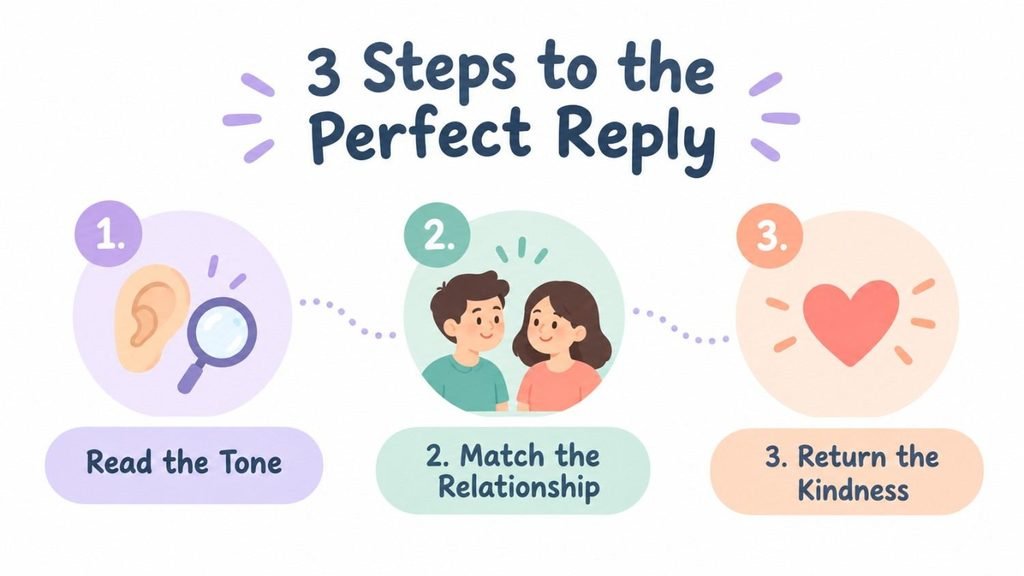
It takes about five seconds. After a few tries the right words just show up.
Conclusion
“Take care of yourself” is small but it carries a lot. Most days it’s a kind goodbye. Sometimes it signals real worry. Once in a while it quietly ends a chapter. Your job is to figure out which one you’re looking at.
Once you know, the reply is easy. Thank them and send the wish back. Then adjust the style. Friends get warmth and bosses get courtesy. Someone who’s worried gets a little reassurance.
So the next time those words pop up on your phone, you won’t freeze. Grab a line from this guide or use your own. What counts is that the other person feels seen. That’s all the phrase is really asking for.
FAQs
What is the best reply of take care of yourself?
“Thank you, you take care too” works almost anywhere. It is warm and short and returns the kindness.
What does take care of yourself mean in a text?
It is a warm goodbye wishing you safety and good health. Tone and history decide whether it feels caring or distant.
How do I reply when my boss says take care of yourself?
Keep it polite and brief. Say “Thank you, I appreciate that. You take care as well.”
Is “take care” a nice way to end a relationship?
Sometimes. Some people use it as a soft goodbye. Check the earlier messages to judge the real tone.
What can I say instead of “you too”?
Try “Thanks, I will,” “Same to you” or “I appreciate that. Stay well.” Each one sounds warm and natural.