
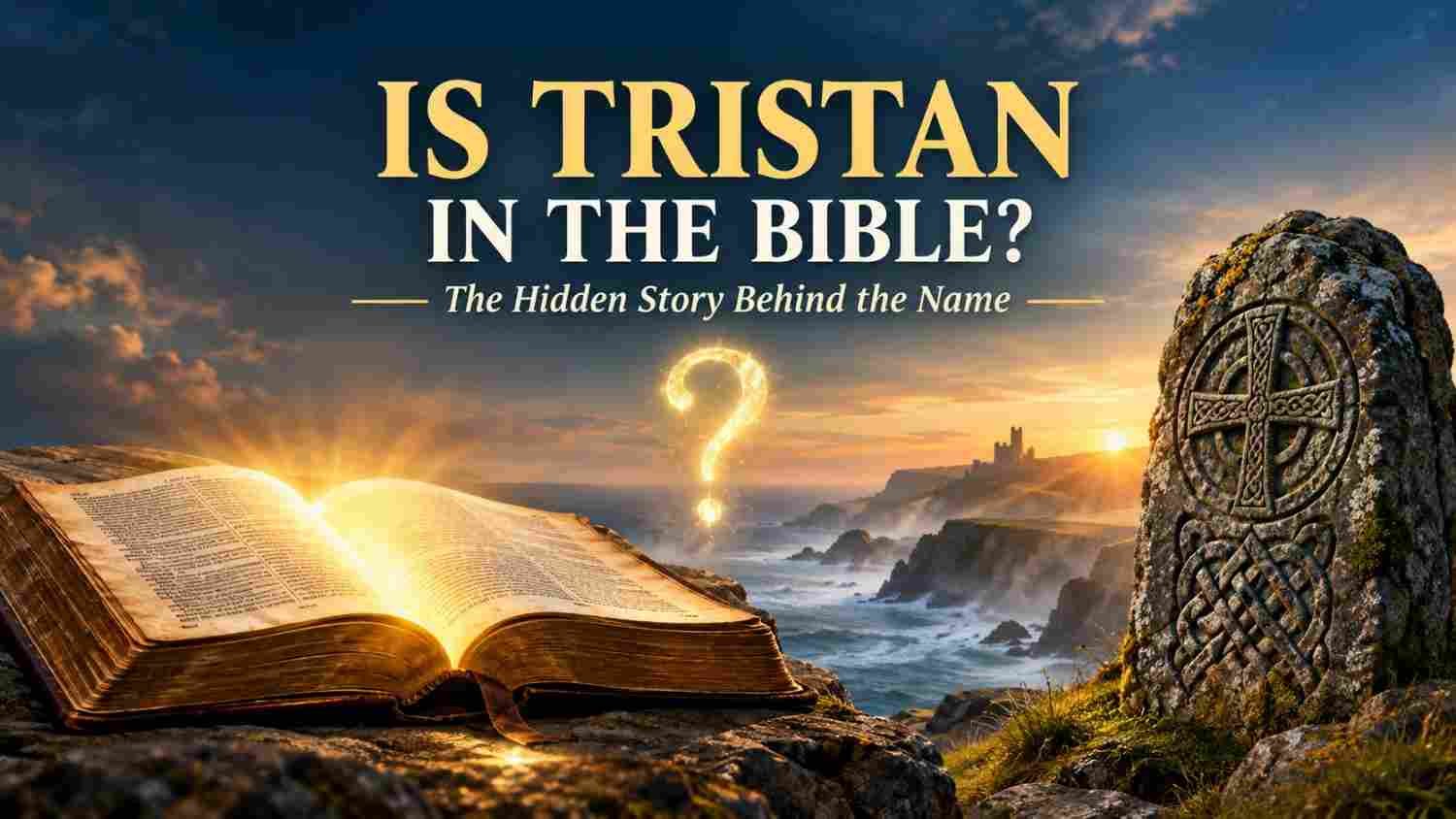
What is the meaning of Tristan in the Bible? Here’s the plain answer. The name Tristan never shows up in Scripture. You won’t find it in the Old Testament, the New Testament, or the Apocrypha.
That catches a lot of parents off guard. Many name websites hint at a spiritual meaning like sorrow or struggle without pointing to a single verse. This guide sorts out what is true and what is just repeated folklore.
In this guide you’ll learn:
- Whether Tristan is in the Bible and why it isn’t
- The real Tristan name origin
- Which biblical names mean sorrow, comfort, or joy
- The best biblical baby boy names if you love how Tristan sounds
- How popular Tristan is in the USA today
What Is the Meaning of Tristan in the Bible?
The Short Answer
Tristan has no biblical meaning because it is not a biblical name. It isn’t Hebrew, Aramaic, or Greek. No writer of Scripture used it, and no person in either testament carries it.
If a site says Tristan means “sorrowful” in the Bible, that claim is a mix-up. The sad association comes from medieval French poetry, not from the Bible.
Does Tristan Appear in Major Bible Translations?
Look through the King James Version, the New International Version, the English Standard Version, or the New American Standard Bible. Tristan isn’t in any of them. The Latin Vulgate and the Greek Septuagint don’t have it either.
What the Vulgate does contain is the Latin word tristis, which means sad. That word is the likely source of a very common confusion, which we’ll get to shortly.
Why So Many People Search This Phrase
Three groups tend to type this question into Google:
- Parents who want a baby boy’s name with spiritual weight.
- Christians who want to know if a name has scriptural backing.
- Readers of fantasy and romance who know the legend of Tristan and Isolde and want to trace it.
Each group deserves a real answer instead of a copied name blurb.
Tristan Name Origin: Celtic Roots, Not Hebrew
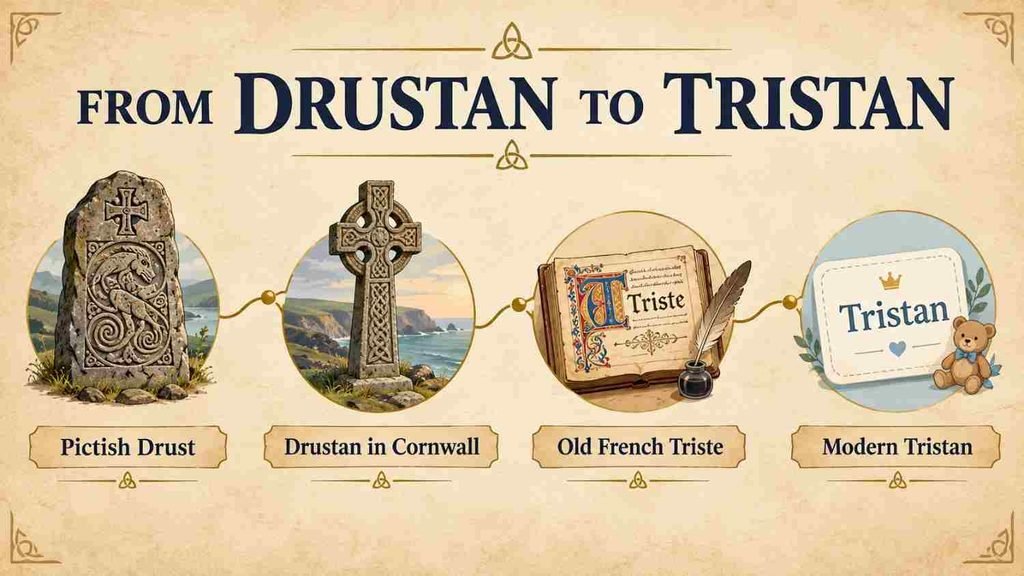
From Drustan to Tristan
The Tristan name origin is Brittonic, part of the Celtic language family once spoken across ancient Britain. The earliest form of the name is usually “Drustan,” but people also spell it “Drystan” or “Trystan.””Trystan.”.” It’s a small form of the Pictish name Drust or Drest.
Scholars link the root to a Celtic word tied to tumult or uproar, though the exact etymology is still debated. So the oldest likely meaning sits closer to “noisy” or “riotous” than to “sad.”
The Sixth Century Stone in Cornwall
One of the earliest traces is a carved stone near Fowey in Cornwall, England. The Latin inscription names Drustanus, son of Cunomorus. You can learn more about the Tristan Stone on Wikipedia. Many historians connect this figure to the hero who later appeared in legend.
The name therefore has roots in British history centuries before writers composed the medieval romances.
How “Triste” Changed the Meaning
When the story moved into Old French in the 12th century, the name got reshaped. French poets heard “triste,” the French word for “sad,” which descends from Latin tristis. The tragic plot made the link feel natural.
This is why many modern sources say the Tristan name’s meaning is “sorrowful” or “born of sadness.” It’s a folk etymology. The meaning was attached later because it sounded right, not because it was the original root.
Tristan and Isolde: The Legend That Spread the Name
The tale of Tristan and Isolde follows a knight, an Irish princess, and a love that ends badly. I
Writers featured the story in 12th-century versions by Béroul and Thomas of Britain, in Gottfried von Strassburg’s German poem, and in Sir Thomas Malory’s Le Morte d’Arthur, where the hero often appears under the name Tristram. Britannica’s overview of Tristan and Isolde gives a solid summary of the legend.
Wagner’s opera in the 19th century made the story famous all over again. That literary fame, not Scripture, is why Tristan became a given name across Europe and later in America.
Tristan Name Meaning vs. Biblical Names
Biblical names often capture a moment in a family’s life. Tristan’s sorrowful flavor has a few real parallels in Scripture, even though the name itself is missing.
Tristan vs. Biblical Names With Similar Ideas
| Name | Origin | Meaning | Where It Appears |
|---|---|---|---|
| Tristan | Celtic and Old French | Tumult, later sorrowful | Not in the Bible |
| Benoni | Hebrew | Son of my sorrow | Genesis 35:18 |
| Mara | Hebrew | Bitter | Ruth 1:20 |
| Ichabod | Hebrew | No glory | 1 Samuel 4:21 |
| Jabez | Hebrew | Linked to pain | 1 Chronicles 4:9 |
| Noah | Hebrew | Rest or comfort | Genesis 5:29 |
| Barnabas | Aramaic and Greek | Son of encouragement | Acts 4:36 |

Biblical Names About Sorrow
The closest match to Tristan’s sad meaning is Benoni. In Genesis 35, Rachel is dying in childbirth and calls her son Benoni, meaning son of my sorrow. Jacob then renames him Benjamin, son of the right hand, and the grief becomes honor.
Mara is the name Naomi picked for herself after her losses, saying life had turned bitter. Jabez is born to a mother who felt pain, and he grows up to pray for blessings.
A pattern runs through these stories. When Scripture names a child for sorrow, God usually redeems it.
Biblical Names About Comfort and Joy
If you like Tristan’s tone but want a hopeful meaning, look at Noah, which means comfort. Nehemiah means comforted by the Lord. Isaac means laughter.
Why the Difference Matters
Hebrew names tend to state their meaning openly. Tristan’s meaning was argued over and rewritten for centuries. Biblical names are explicit, while Tristan’s meaning is layered and literary.
Where “Sad” Shows Up in Scripture and Why It Matters
The Latin Link: Tristis in the Vulgate
In the Latin Vulgate, Jesus says in Matthew 26:38 that his soul is sorrowful, and the Latin begins tristis est anima mea. That Latin word for sorrowful is the same word behind the French “triste” and, through folk etymology, “Tristan.”
This isn’t a biblical meaning of Tristan. It’s a word-family connection, and it explains why many readers sense a spiritual echo in the name.
The Man of Sorrows in Isaiah 53
Isaiah 53 describes a suffering servant as a man of sorrows, a passage Christians read as pointing to Jesus. In Scripture, sorrow is rarely meaningless. It often opens the door to comfort and healing.
Sorrow Turned to Joy
Psalm 30:5 says weeping may last for a night, but joy comes with the morning. Jesus tells his listeners in Matthew 5:4 that those who mourn will be comforted. If you want a faith reading of Tristan’s sorrowful association, these verses give you one. Grief is real, but it doesn’t get the last word.
Biblical Baby Boy Names for Parents Who Love Tristan
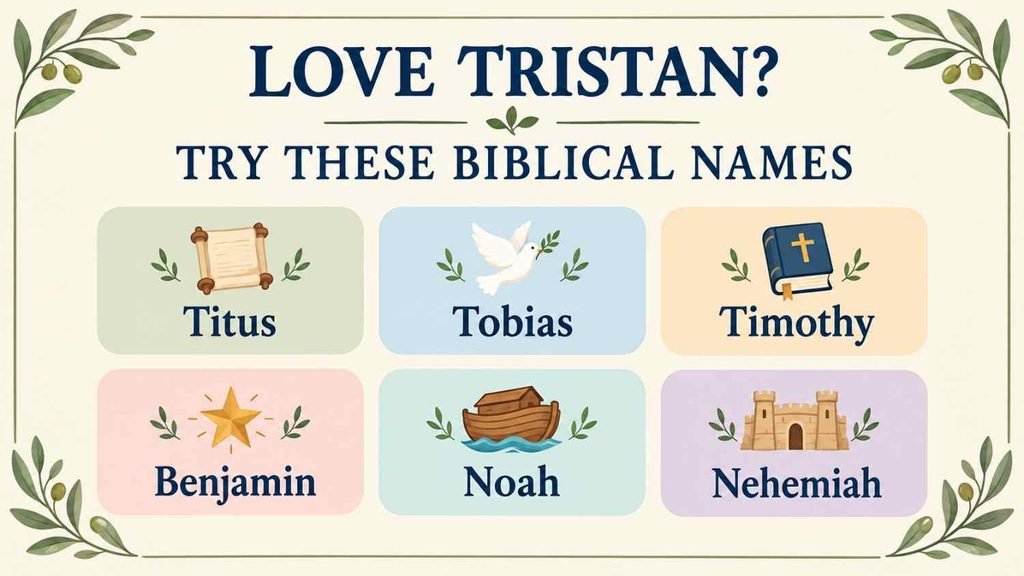
If you want something clearly biblical with a similar feel, these are good places to start.
Names That Sound Like Tristan
- Titus is a Latin name. He was a companion of Paul, and a New Testament letter carries his name.
- Tobias is Hebrew for the Lord is good.
- Timothy is Greek for honoring God and was Paul’s young protégé.
- Thaddeus was one of the twelve apostles.
Names That Match the Meaning People Give Tristan
- Benjamin was born from sorrow, then renamed the son of the right hand.
- Nehemiah means “comfort” and belonged to a leader who rebuilt Jerusalem.
- Barnabas means “encourager” and is tied to kindness in the early church.
A Hybrid Option With a Biblical Middle Name
Plenty of families keep Tristan and add a biblical middle name. Tristan Noah, Tristan Elijah, Tristan Gabriel, and Tristan Benjamin all work well. The child gets a distinctive first name and a scriptural anchor.
Is Tristan a Christian Name?
Christian Use Through History
Tristan was widely used in Christian Europe, especially in Brittany, Cornwall, France, and Germany. Being absent from the Bible never kept a name out of Christian homes. Most names Christians give today, from William to Emma, are not found in Scripture.
Is It Allowed?
The Bible does not forbid names from outside its pages. Many Christians choose names for family heritage, sound, or personal meaning. What matters more is the faith in which the child is raised.
Giving Tristan a Faith Story
You can attach a verse to the name, such as Psalm 30:5 about joy after weeping, or Isaiah 61:3 about beauty in place of ashes. That gives the name a spiritual story without claiming anything untrue about where it came from.
Tristan Name Popularity in the USA
Trends Over Time
Tristan climbed in American popularity during the 1990s and 2000s, helped by the 1994 film Legends of the Fall, where a main character carries the name. You can check yearly rankings yourself on the Social Security Administration baby names page. The name is still familiar among boys born in recent decades, though it has cooled from its peak.
Spelling Variants
Common variants include Tristen, Tristin, Tristian, Trystan, and Tristram. If you want the form closest to the legend, go with Tristan or Trystan. A broader look at the name’s history is on the Tristan page at Wikipedia.
Nicknames and Pairings
Popular short forms include Tris and Tristy. Middle names that flow well include James, Michael, and Alexander, along with the biblical picks above.
Conclusion
The meaning of Tristan in the Bible is simple. There isn’t one. Tristan is a Celtic name that picked up its sorrowful tone through medieval French wordplay and the legend of Tristan and Isolde. It does not appear in Scripture.
Three key takeaways:
- Tristan is not a biblical name, and its roots are Brittonic and Old French.
- The sorrowful meaning is a later folk etymology tied to the word triste.
- For a biblical match, look at Benjamin, Noah, or Nehemiah, or keep Tristan and add a biblical middle name.
Still deciding? Write down your top three names, check their meanings and the verses behind them, and choose the one that fits your child’s story.
FAQ: People Also Ask
Is Tristan a biblical name?
No. Tristan does not appear in any Bible translation. It is a Celtic name made popular by medieval legends.
What does the name Tristan mean spiritually?
It has no scriptural meaning. The sorrowful sense comes from French folk etymology, and many Christians pair it with verses about joy after sorrow.
What is the biblical equivalent of Tristan?
There is no exact match. Benoni, meaning son of my sorrow, is closest in meaning, and Benjamin is its redeemed form.
Can Christians name their baby Tristan?
Yes. The Bible does not require biblical names, and Tristan has a long Christian history in Europe.
What is the origin of the name Tristan?
It comes from the Brittonic name Drustan. Old French poets later linked it to triste, meaning sad.