
Ever stopped halfway through a sentence and wondered if it’s upon or apon? You’re in good company. This tiny word trips up students, office workers and plenty of confident writers. It looks easy, but it hides a sneaky sound trap.
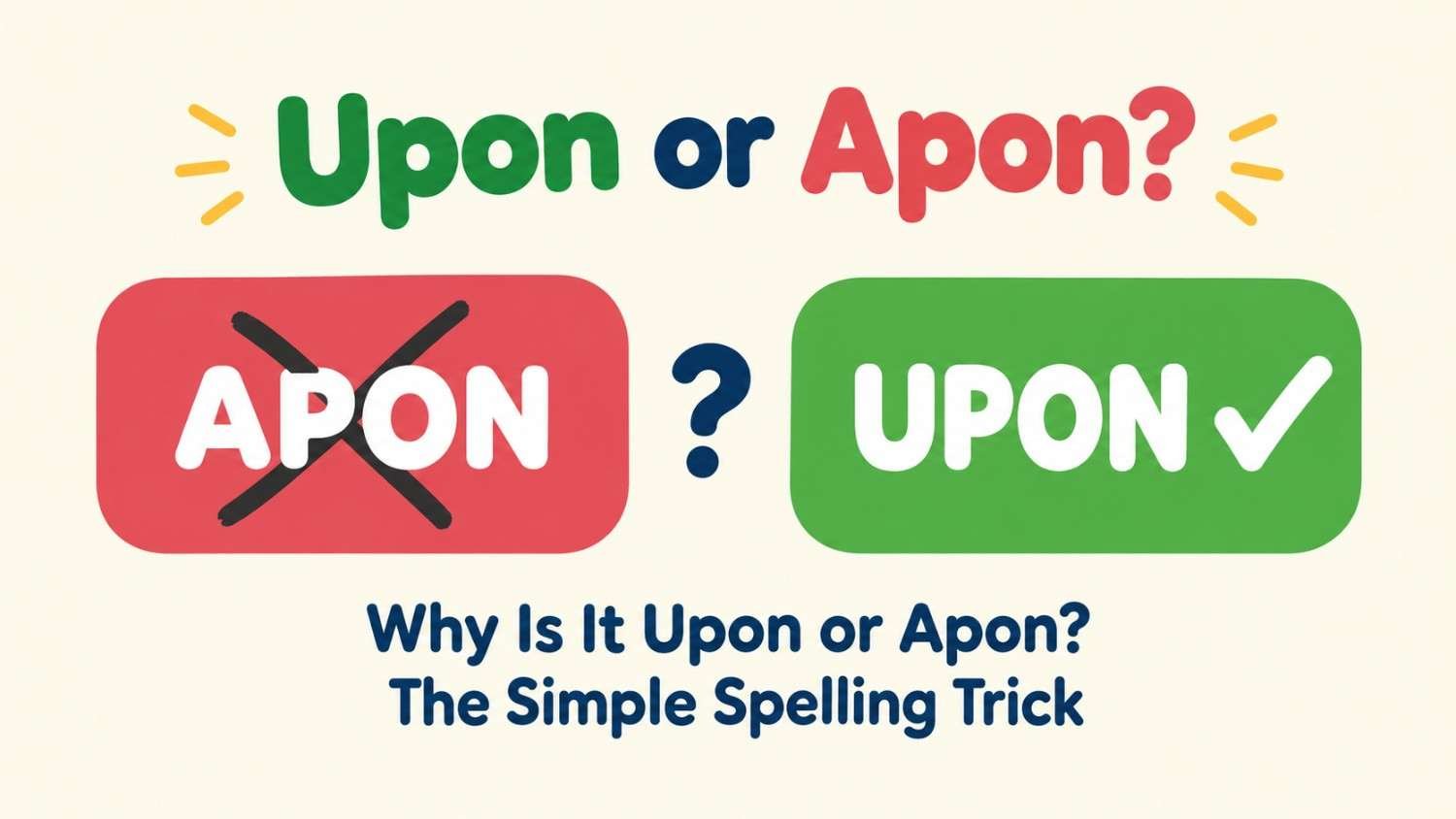
Here’s the quick answer. Upon is correct and apon is a typo. In this guide you’ll learn what upon means, why so many people type apon, how upon differs from on and up on, and how to spell upon right every time. You’ll also get tables, real examples and a few memory tricks you can use today.
Upon or Apon
Short on time? Start here. The details come after.
The Short Verdict
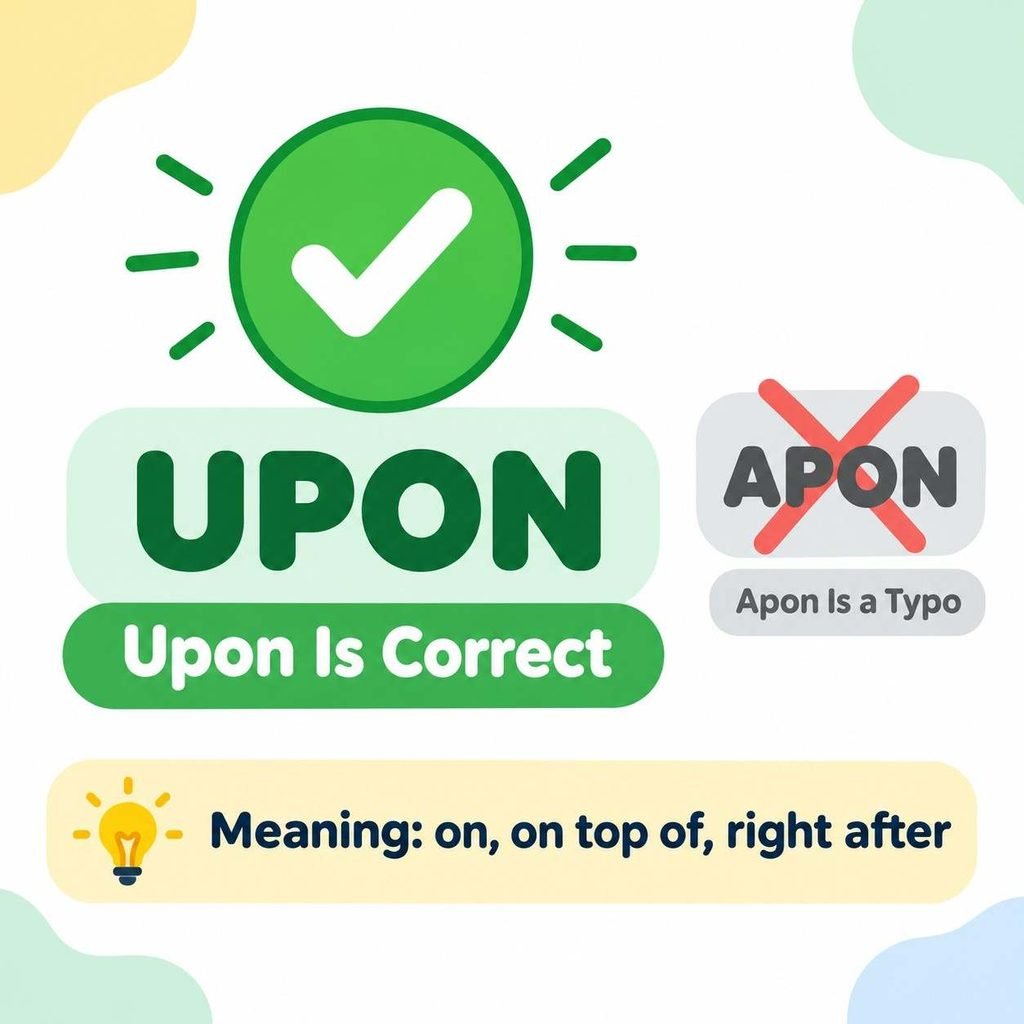
Upon is the correct spelling. Apon is not a standard English word. Upon is a preposition that can mean on, on top of, right after or by chance. You can confirm this on the Merriam-Webster entry for upon, which lists upon as a normal word and has no standard entry for apon.
Is Apon a Word?
Not in everyday English. If you’re asking “is apon a word,” the fair answer is “only in special cases.” Apon shows up as a given name and as a Bengali word that means own or dear. A few brands use it too. None of those uses turn it into a second spelling for the preposition.
How to Spell Upon
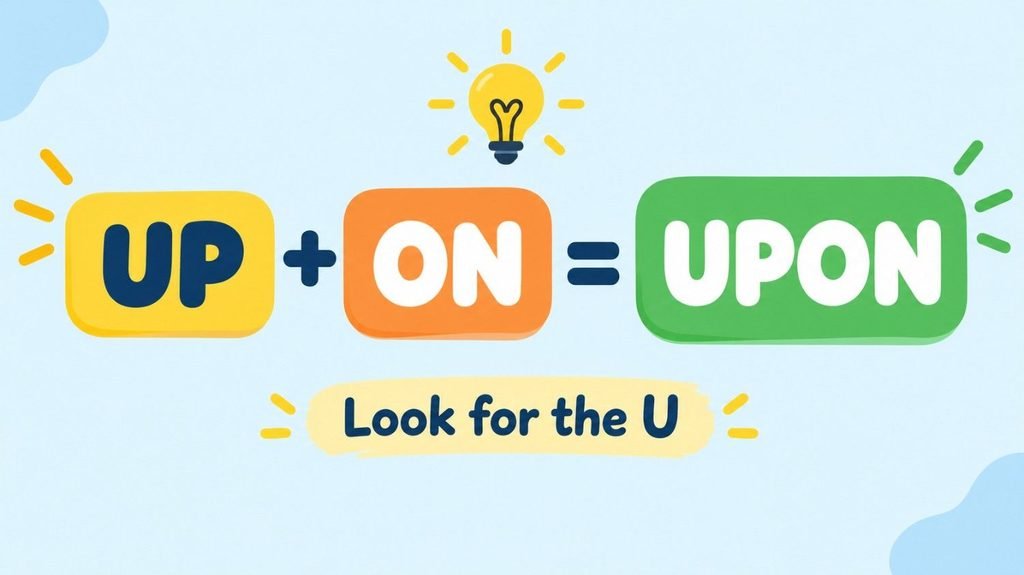
Spell it U P O N. Picture two small words glued together: up and on. If you see up at the start, you’ve got it right. That one trick settles most doubts about how to spell upon.
| Spelling | Status | Use it? |
|---|---|---|
| Upon | Correct | Yes |
| Apon | Typo in English | No |
| Up on | Two words with a different job | Only in some sentences |
| Uppon | Old form | No |
What Does Upon Mean?
The upon meaning shifts a little with each sentence. Still, it fits into three main groups. Learn them and the word gets easy to read and write.
Upon as “On Top Of”
This is the most physical meaning. One thing rests on another.
- The cat slept upon the warm blanket.
- A crown sat upon the queen’s head.
- Snow settled upon the rooftops.
In daily talk most people would just say on. Upon adds a formal or storybook feel.
Upon as “Right After”
Here upon is about timing. One event follows another at once.
- Upon arrival, please sign the guest book.
- He smiled upon seeing his old friend.
- Upon finishing the test, hand it to the teacher.
Business emails and official notices lean on this meaning a lot. It sounds polite and clear.
Upon as “By Chance”
Paired with come or happen, upon means finding something you weren’t looking for.
- We came upon a quiet beach after an hour of driving.
- She stumbled upon her grandmother’s recipe book.
- They happened upon a street fair on the way home.
Upon Meaning in Fixed Phrases
Some phrases have held onto upon for centuries. In these, on rarely works.
- Once upon a time opens a story.
- Upon request means when someone asks.
- Upon reflection means after thinking it over.
- Depend upon means to rely on.
- Insist upon means to demand firmly.
- Act upon means to take action based on something.
In plain talk you can say depend on or rely on. The meaning stays put. Only the tone changes.
Why People Write Apon
Typos rarely come out of nowhere. They follow patterns. Apon is a classic case of the ear fooling the eye.
The Soft Uh Sound
Say the word out loud. You hear “uh PON.” That first sound is weak and short. Linguists call it a schwa, and it’s the most common vowel sound in English.
Here’s the catch. English spells the schwa many ways. It can be an A, E, I, O or U. Think of the A in banana, the E in taken and the U in upon. The sound gives you no hint about the letter.
The About, Above, Again Pattern
Lots of common words start with a weak A. About, above, again, around, away and among all do. Your brain spots the pattern and applies it to new words. When it meets upon, it guesses an A. The guess feels natural, but it’s wrong.
Fast Typing and Autocorrect Gaps
Speed makes things worse. When we type fast we spell by ear and skip the second look. Spell checkers catch plenty of errors, yet they can miss a word that also works as a name or a word in another language. That’s one reason the apon spelling still sneaks into emails, posts and school papers.
Quick Look at the Causes
| Cause | What happens | Fix |
|---|---|---|
| Schwa sound | Your ear suggests the letter A | Spell by letters and not by sound |
| Word pattern | Your brain copies about and above | Remember up plus on |
| Fast typing | Your eyes skip the check | Proofread once |
| Weak spell check | A name use hides the error | Search your draft for apon |
Upon vs On vs. Up On
Many writers wonder whether to pick upon, on or up on. The three look alike, but they do different jobs. Let’s sort them out.
Upon vs. On: Tone Is the Main Difference
In many sentences upon and on mean the same thing. Swap one for the other, and the sense holds. The real gap is tone. On feels relaxed and natural. Upon feels formal or old fashioned.
| Feature | On | Upon |
|---|---|---|
| Tone | Neutral and everyday | Formal or literary |
| Best for | Chats, texts and daily writing | Letters, speeches, contracts and stories |
| Fixed phrases | on time, on purpose | once upon a time, upon request |
| Sound in a sentence | Light | Slightly heavier |
| Can it replace the other? | Almost always | Sometimes it sounds stiff |
Try this line: “Put the book on the table.” It sounds normal. Now try “Put the book upon the table.” That one sounds like it came from an old poem. When you’re unsure, pick on.
Some lines do need upon. Nobody says “on a time” in a fairy tale. Fixed phrases keep their old form. The Cambridge Dictionary page for upon shows several of these set expressions with examples.
Up On vs Upon: Two Words or One?
Some writers split the word in two. But up on vs upon is not a spelling choice. They’re different things. In up on, the word up is an adverb and on is a preposition. Each does its own job.
- Climb up on the roof.
- Read up on the topic before the quiz.
- Hop up on the stage.
Upon works as one single preposition.
- The snow fell upon the quiet town.
- Upon hearing the news, she cheered.
Here’s a simple test. Take out the word up. If the sentence still makes sense with only on, you likely need up on as two words. If upon could swap with on and keep the meaning, one word is right.
How to Choose in Seconds
Ask yourself three quick questions. Is the setting formal? Is it a fixed phrase? Does the sentence read fine with on? If the first two answers are yes, use upon. If the third is yes and the tone is casual, use on.
Where Upon Came From
Knowing a word’s past helps you remember it. The story of upon is short.
A Word Built From Two Small Parts
Upon grew out of the words up and on. It has lived in English for many centuries. The Oxford English Dictionary traces its long history and shows forms of upon in early English texts.
Why Old Spellings Looked Different
Early English had no fixed spelling rules. Scribes wrote words the way they heard them. Old manuscripts show many versions of upon, some with doubled letters and swapped vowels. A few look strange to modern eyes. That messy past is one reason a form like apon can still feel oddly familiar.
How the Spelling Settled
Printing changed everything. Once books spread, printers pushed for steady spelling, and dictionaries added to that push. Samuel Johnson’s dictionary in 1755 helped lock many spellings in place. Upon settled with a U and has kept it ever since.
The Once Upon a Time Spelling
The once upon a time spelling deserves its own note. Plenty of people type “once apon a time” because the phrase is so familiar by ear. The right form is always once upon a time. This phrase has opened English stories for ages and it has never used an A.
How to Spell Upon Every Time
Knowing the rule is good. Building a habit is better. Here are simple ways to lock in the right spelling.
Easy Memory Tricks
- Split it into up plus on.
- Notice the U at the start, just like up.
- Say “up on” slowly in your head before typing.
- Type upon three times to build muscle memory.
- Link it with the phrase once upon a time.
The first trick works best. Upon is literally up and on joined together. Once you see those two little words, the letter A never feels right again.
Proofreading Habits That Work
Strong writers don’t trust memory alone. They add small checks to their routine.
Read your work out loud once before you send it. Your ear may catch a clumsy phrase that your eyes missed. Use the find tool in your editor and search for apon. Fix any match in seconds. Keep spell check on at all times, since most tools flag the apon spelling right away.
Finally ask whether upon suits your tone. In a casual note to a friend, on may sound cleaner. In a business letter, upon may be perfect.
Words Built From Upon
Upon also forms a small family of formal words. They look old but still show up in legal and academic writing.
- Thereupon means right after that or because of that.
- Whereupon means at which point.
- Hereupon means at this point.
Each word ends with the full word upon. You’d never write thereapon or whereapon. If you doubt a spelling, look for upon hiding inside it.
Real Sentences to Test Yourself
Seeing wrong and right side by side helps the correct form stick.
| Sentence | Correct? | Fix |
|---|---|---|
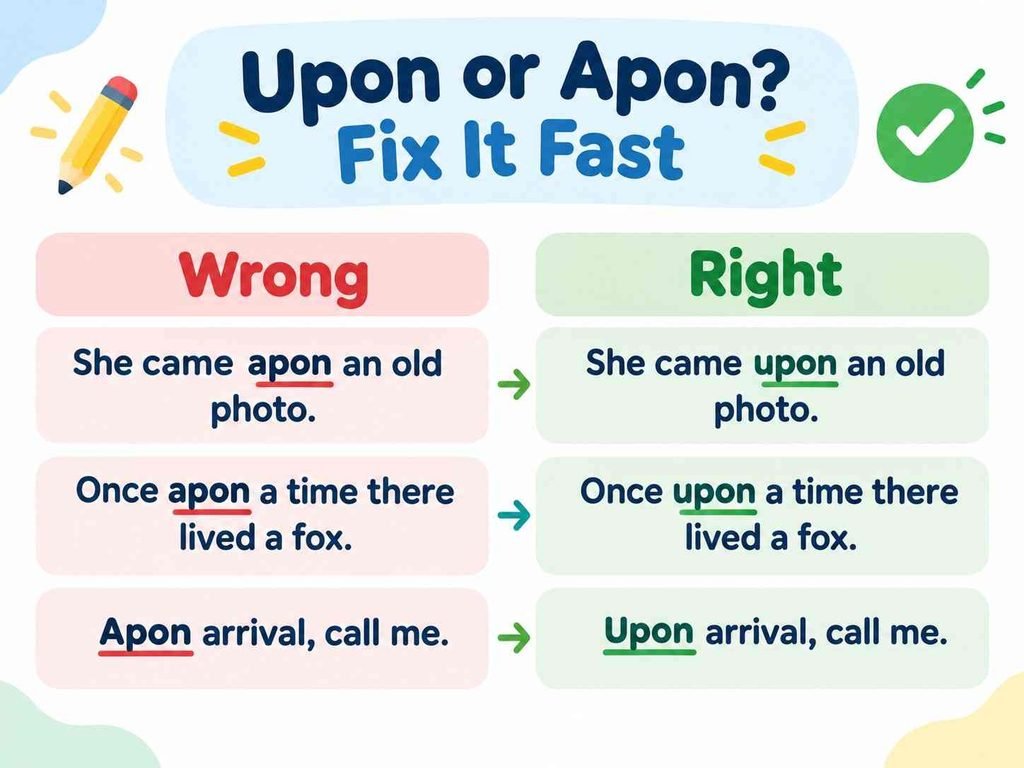
| She came apon an old photo. | No | She came upon an old photo. |
| Once apon a time there lived a fox. | No | Once upon a time there lived a fox. |
| Apon arrival, call me. | No | Upon arrival, call me. |
| He sat upon the bench. | Yes | No change needed |
| Samples are free upon request. | Yes | No change needed |
Read each fixed line out loud. Both spellings sound the same. That’s why your eyes have to do the work and not your ears.
Other Words With the Same Trap
Apon isn’t alone. Many words hide a weak vowel that tempts us to guess. You can check any of them on Dictionary.com or a similar site.
- Separate is often misspelled as seperate.
- Definitely is often misspelled as definately.
- Grammar is often misspelled as grammer.
- Calendar is often misspelled as calender.
The fix is the same each time. Slow down and check the vowel. Don’t trust the sound alone.
Conclusion
Upon is the only correct spelling for the preposition. Apon is a typo born from the soft “uh” sound at the start of the word. Here are the three key takeaways from this guide.
- Upon is correct and apon is a typo, except as a name or a Bengali word.
- Upon equals up plus on, so look for the U.
- Use on for casual writing and upon for a formal tone or fixed phrases.
Next time this spelling comes up, pause for one second and think “up plus on.” Then bookmark this guide and share it with a friend who still writes apon. A small check now saves a red face later.
FAQs
Is it upon or apon?
Upon is correct. Apon is a common typo caused by the soft “uh” sound at the start of the word.
Is apon a word?
Not in standard English. It appears only as a name or a Bengali word meaning own or dear.
What does upon mean?
Upon is a preposition meaning on, on top of, right after or by chance.
What is the difference between on and upon?
They often mean the same thing. Upon sounds more formal while on feels natural in daily speech.
Can I use upon in everyday writing?
Yes. Upon is correct anywhere, though on is often the lighter choice in casual texts.