
You have probably seen three little letters in a comment section, a text thread, or a dating profile and wondered what they meant. Millions of people search for this term every year, and the answer changes depending on who is speaking and where the conversation is happening.
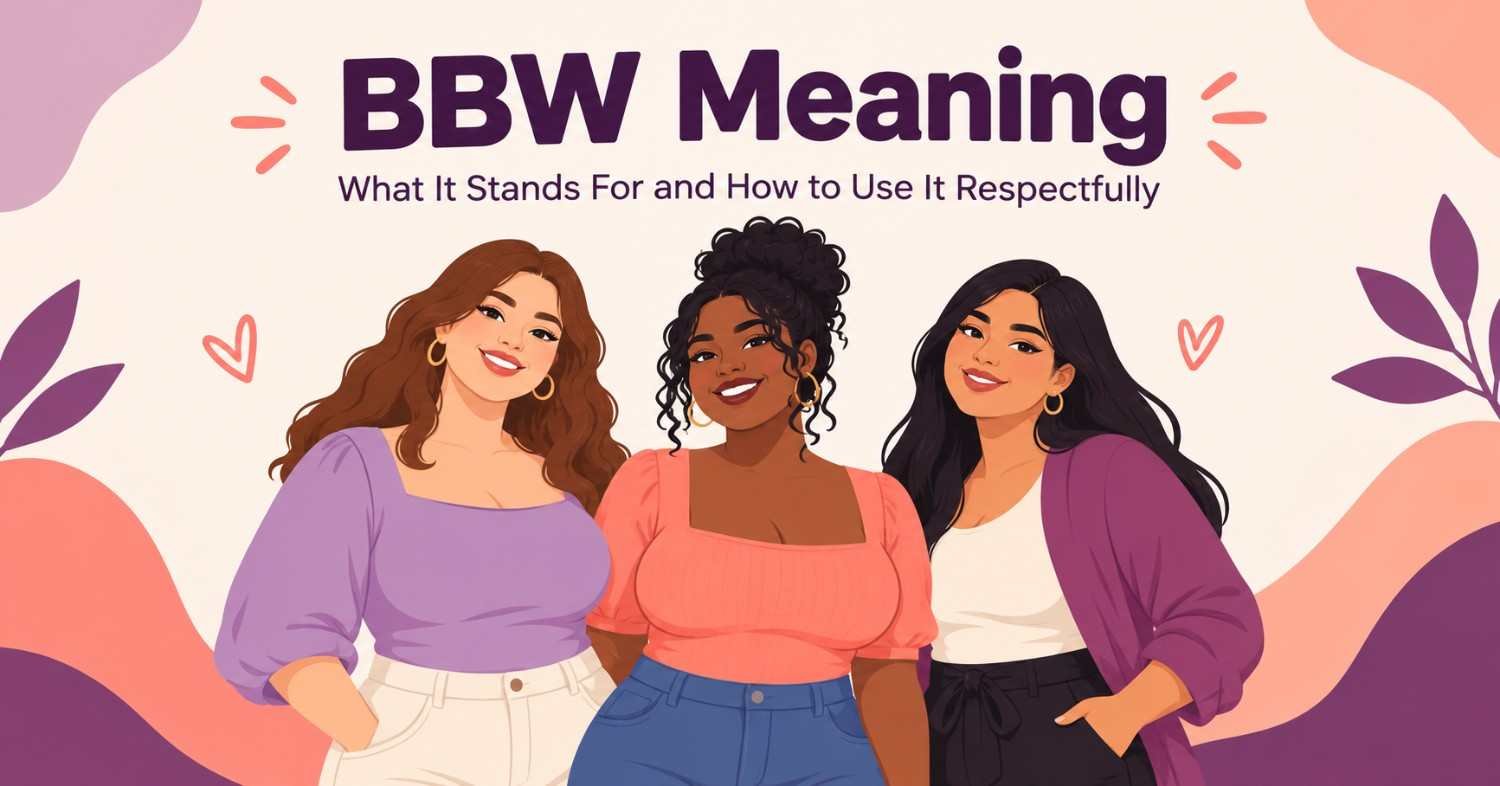
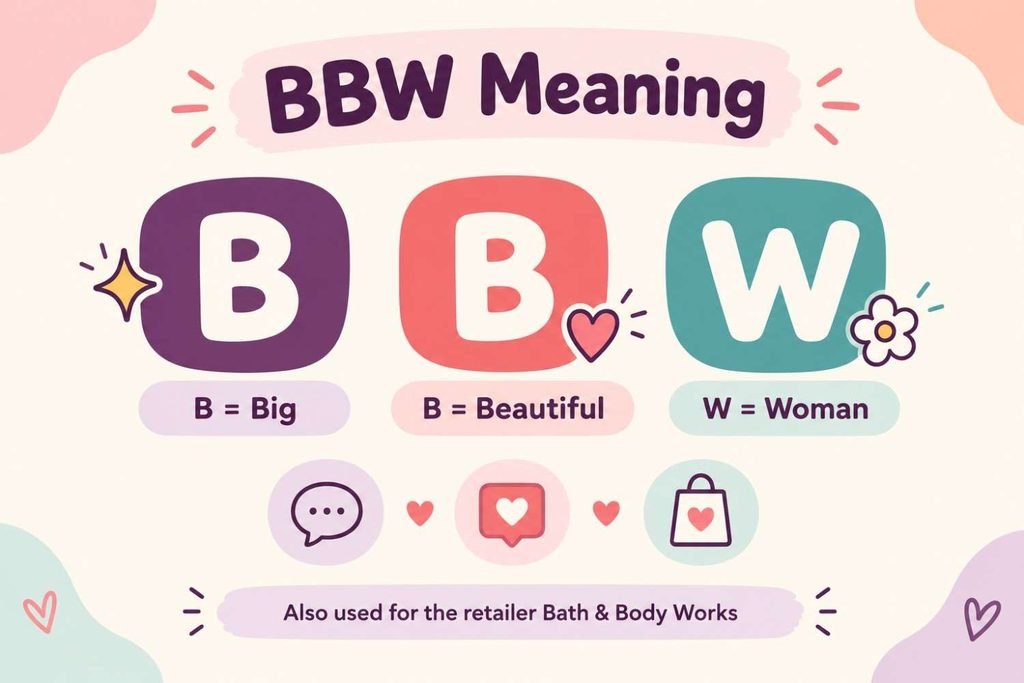
The short answer is simple. The BBW meaning most people want is Big Beautiful Woman. It describes a curvy, full-figure, or plus-size woman, and it is usually meant as a compliment. In a shopping context, the same letters can point to the store Bath & Body Works.
What makes this term interesting is that it has a real paper trail. It began as a magazine title in 1979, grew alongside the size acceptance movement, and today lives in a mix of fashion talk, social media identity, and dating shorthand. Some women love it. Others would rather skip it.
In this guide you’ll learn what BBW stands for, what other meanings you might run into, how the term started, how it compares to plus size and curvy, how it connects to body positivity, and how to use it without hurting anyone’s feelings.
What Does BBW Stand For?
The Main Definition: Big Beautiful Woman
BBW stands for Big Beautiful Woman. The phrase puts the words “big” and “beautiful” side by side on purpose. That pairing was a statement. It said that a larger body can be attractive and that nobody needs to shrink to deserve admiration.
There is no official size cutoff. Some people apply the label to anyone who wears plus sizes, which in the United States usually means size 14 and above. Others use it for any woman who feels it fits her. Since nobody owns the definition, the label is mostly chosen by the person wearing it.
BBW Meaning in Text and Online Chats
When you see the BBW meaning in text messages, direct messages, or comment threads, it almost always means Big Beautiful Woman. You might see it in a sentence like “She is a gorgeous BBW with so much confidence” or in a bio that reads “Proud BBW living my best life.”
Tone matters a great deal here. Between partners, the term can feel warm and affectionate. From a stranger in your inbox, the very same letters can feel pushy or invasive. The abbreviation stays the same, but the impact changes with the relationship behind it.
Other BBW Meanings You May Come Across
Search results for this keyword can feel messy because the letters have a few uses. The most common one after Big Beautiful Woman is Bath & Body Works, the American retailer known for candles, soaps, and fragrance. You can see the company at its official site at https://www.bathandbodyworks.com. Its stock ticker is BBWI, and shoppers often shorten the store name to BBW when talking about sales and seasonal scents.
Some communities also use the plural form, Big Beautiful Women, in group names and event titles. The quick way to sort it all out is to read the surrounding words. If the sentence mentions candles, coupons, or a mall, think retail. If it mentions a person, a body, or a profile, think Big Beautiful Woman.
The Origin and History of Big Beautiful Woman
The Magazine That Started It All
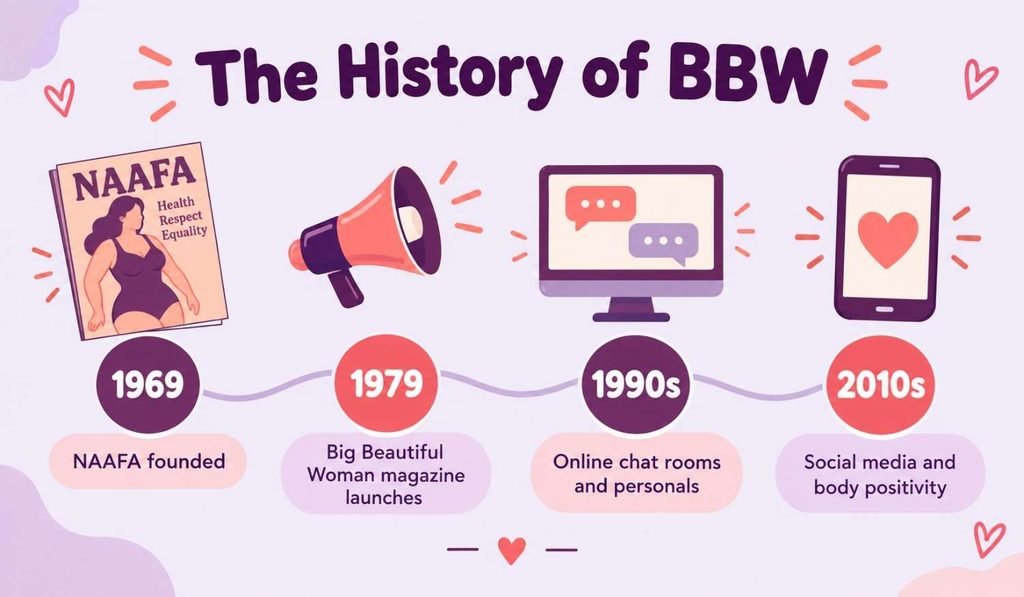
The abbreviation grew out of Big Beautiful Woman magazine, which launched in 1979 under founder Carole Shaw. It was a fashion and lifestyle publication aimed at plus-size women. At that time, mainstream magazines mostly ignored larger readers or treated their bodies as a problem to solve. This publication did the opposite. It offered style advice, featured models who looked like its audience, and kept returning to one idea: size and beauty are not opposites.
Once the title caught on, readers and advertisers naturally shortened it to BBW. Like many nicknames, it stuck because it was quick to say and easy to remember.
Links to the Fat Acceptance Movement
The term also sits in the same era as the fat acceptance movement. The National Association to Advance Fat Acceptance, known as NAAFA, was founded in 1969, ten years before the magazine appeared. You can read about the group at https://naafa.org. Its work focuses on fighting weight-based discrimination in jobs, healthcare, and public life. For a broader overview of the movement itself, see https://en.wikipedia.org/wiki/Fat_acceptance_movement.
The magazine and the activist groups were separate organizations, but they shared goals. Both pushed for dignity, visibility, and fair treatment for larger people. Over time, those goals blended into the culture that now surrounds the term.
How the Internet Changed Everything
The web gave the abbreviation a second life, and the story unfolds in three stages.
- In the 1990s and early 2000s, online chat rooms and personals sites made BBW a common label. It signaled either identity or attraction to fully figured women.
- The adult entertainment industry adopted the abbreviation as a category label. This is a big reason people search the term today, and it is also why some women feel uneasy about it.
- In the social media era, creators, models, and influencers began reclaiming the word. They used it beside hashtags about fashion, confidence, and body acceptance.
Because of this layered history, BBW slang now carries more than one flavor. For some people it sounds proud and empowering. For others it sounds niche or sexualized. Neither reaction is wrong, and knowing both helps you read a situation before you speak.
BBW Slang: Where You Will See It Today
Social Media and Creator Culture
On TikTok, Instagram, and X, many creators use BBW in bios and hashtags. They do it to find community, share outfit ideas, and talk openly about confidence. The term often travels alongside words like “curvy,” “plus-size fashion,” and “body positivity,” so a quick scroll through those tags shows how many different people use it and why.
For many creators, the label works like a signpost. It tells like-minded followers that this is a space where larger bodies are celebrated and not apologized for.
Dating Profiles and Personals
On dating platforms, BBW can appear in two ways. A woman might use it to describe herself, or a user might list it as something they are attracted to. In both cases it works as shorthand, saving a few words in a short bio.
The downside is that the term can attract messages that feel more like a category search than a real conversation. Many women who use it add a line or two of personality to set the tone and filter out lazy openers.
Fashion and Retail Language
Clothing brands have widened their size ranges in recent years. Still, their official wording tends to be plus size, extended sizes, or curve. BBW shows up more in community spaces than in corporate marketing, with the clear exception of the retailer Bath & Body Works, which has nothing to do with the body-related meaning.
Common Misreadings to Avoid
A few quick reminders can save you from an awkward moment. Do not assume the term is always sexual, because many people use it purely as a body-positive identity. Do not assume it is always flattering either, because some people find it reducing. And do not confuse it with the store without checking the context first.
BBW vs. Plus Size and Other Similar Terms
BBW vs. Plus Size
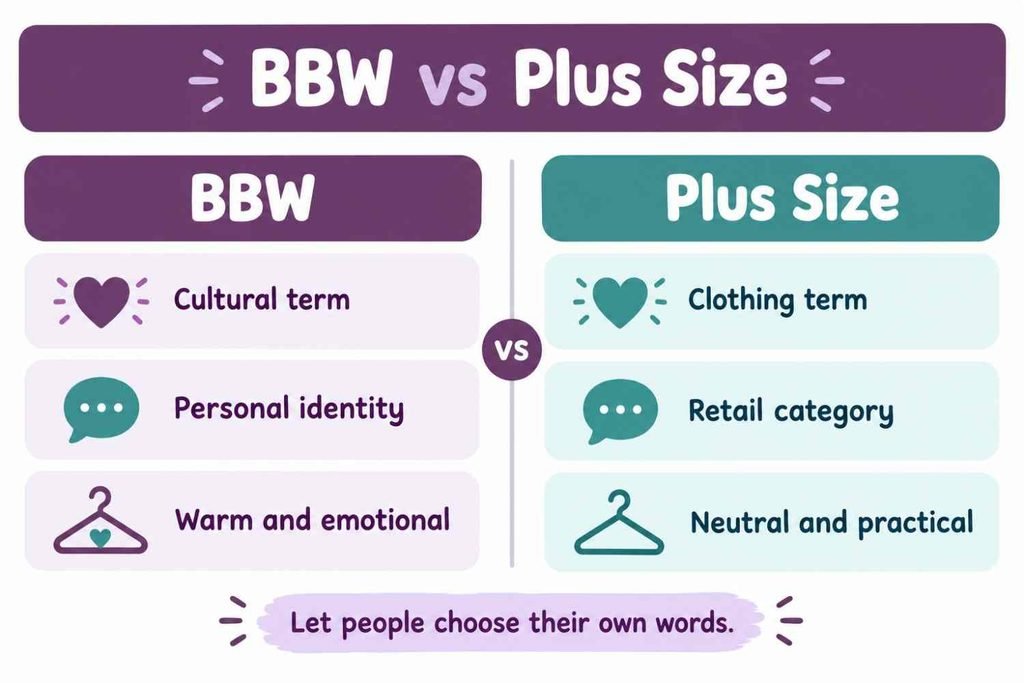
People often ask about BBW vs. plus size, and the difference is mostly about register and origin. “Plus size” is a neutral, commercial phrase. It describes clothing categories and appears on store websites, size charts, and modeling agency pages. It carries no emotion by design.
BBW is a cultural term. It comes with feeling, history, and sometimes a hint of attraction. A retailer will advertise a plus-size collection. A person might say “I am a BBW” as part of how she sees herself. Same general group of people, very different tone.
How It Compares to Curvy, Full-Figure, Fat, and Thick
Here is a quick walk through the neighboring words.
Curvy is soft and flattering. It can apply to many body types, including smaller ones with defined hips and waist. Full figured is polite and a little dated, and it turns up more in older fashion writing and catalogs. “Thick” is casual slang in the United States, often admiring, and it focuses on proportions like hips and thighs.
Fat is the trickiest. Some people have reclaimed it as a plain descriptive word with no insult attached, especially within activist circles. Others still hear it as a slur. Consent and context are critical here, so it is wise to follow the lead of the person you are speaking with.
BBW sits in the middle of this group. It is warmer than plus size, more specific than curvy, and less contested than fat, though it brings its own baggage because of how the internet has used it.
Is BBW an insult?
Generally, no. The words “beautiful” and “woman” are built right into the phrase, and most people who use it mean it kindly. But good intentions and actual impact are not always the same thing. Being labeled by a stranger, especially in an unprompted comment, can feel presumptuous or fetishizing.
A simple rule helps: a person’s own word for her body outranks any word you pick for her.
BBW Body Positivity: Empowerment and Criticism
Why Many Women Embrace the Label
For many women, BBW body positivity is the whole point. Saying “big” and “beautiful” in one breath pushes back against decades of media that equated worth with thinness. You can read more about the wider idea of body positivity at https://en.wikipedia.org/wiki/Body_positivity.
Women who embrace the label often describe a few benefits. It creates community among people who rarely saw themselves in magazines or on screen. It offers a confident, affirming way to describe a body. And it helps challenge stigma in fashion, dating, and media.
Why Representation Matters, in Numbers
The case for visibility becomes clearer when you look at the data. The Centers for Disease Control and Prevention reports that about 41.9 percent of American adults had obesity during the 2017 to March 2020 survey period, which means larger bodies are far from rare. You can explore the agency’s figures at https://www.cdc.gov/obesity/index.html.
A widely cited 2016 study in the International Journal of Fashion Design, Technology and Education estimated that the average American woman wears a size 16 to 18. That is larger than the standard sizes many brands used to build their ranges around. The plus size apparel market has grown into a multibillion dollar segment as retailers have responded.
Even so, plus size women still report trouble finding well made, stylish clothing. They also describe weight stigma in doctor’s offices and workplaces. That gap between numbers and treatment is why many people see the label as more than a word.
Where the Criticism Comes From
Not everyone is comfortable with the term, and the reasons deserve respect.
Some women feel the term has been fetishized because of its heavy use in adult content, so it reduces them to a category instead of a whole person. Others argue that any label based on size, even a positive one, keeps attention fixed on appearance. And some point out that the word beautiful can suggest a body must earn its worth by being attractive.
That last concern leads to body neutrality, a movement that focuses on what a body can do instead of how it looks. Some people prefer it to body positivity. Many hold a little of both views, and that is perfectly fine.
A Quick Word About Health
The term describes appearance and identity. It makes no claim about health, which depends on many personal factors including genetics, habits, access to care, and medical history. Weight alone is a poor predictor of how healthy someone is. For personal health questions, a qualified doctor is a better guide than any slang term.
How to Use the Term BBW Respectfully
Follow the Person’s Lead
If someone calls herself a BBW, it is generally fine to use the same word in that conversation. If she prefers curvy, plus size, or something else, mirror her language instead of swapping in your own. It is a small habit that shows you are listening.
Avoid Unsolicited Labels
There are a few things worth skipping. Do not comment on a stranger’s body, even when you mean well. Do not use the term as a category when messaging someone you do not know. And do not assume that everyone of a certain size wants to be called a BBW.
Rules for Different Settings
At work, avoid body based labels altogether. With friends and family, use the word only if the person has said she likes it. On dating apps, respect how people describe themselves and hold back on remarks about their bodies. On social media, never tag or label others without permission. For brand writing and marketing, choose plus size or whatever wording your audience prefers.
If Someone Calls You a BBW
You have options. You can accept it with a smile, correct it, or simply ignore it. A calm sentence like “I prefer curvy, thanks” works well, and so does “I would rather you not label me.” Your comfort comes first, and you owe nobody an explanation.
Conclusion
The BBW meaning looks simple on paper: Big Beautiful Woman. In real life, it is a term with a documented history, devoted fans, and thoughtful critics. It started as a magazine’s push for visibility in 1979, grew alongside the size acceptance movement, and was reshaped by the internet into something that means different things in different spaces.
Here are three takeaways to remember. First, BBW stands for Big Beautiful Woman, but it can also point to Bath & Body Works, so context always matters. Second, the term is meant to lift people up, yet intent and impact can differ, especially for anyone who feels labeled or fetishized. Third, the kindest habit is to let people choose their own words for their own bodies.
Now that you understand the BBW meaning, use it with care. Share this guide with a friend who has been wondering about the term, and keep exploring our other articles on inclusive language and body confidence.
FAQs
What does BBW mean in text?
It means Big Beautiful Woman. It describes a curvy or plus size woman and is usually meant as a compliment.
Is BBW a bad word?
Not by design. Some people still dislike being labeled by size, so it depends on who says it and why.
What is the difference between BBW and plus size?
Plus size is a neutral clothing term. BBW is a cultural and identity term with more emotion attached.
Where did the term BBW come from?
It comes from Big Beautiful Woman magazine, launched in 1979 by Carole Shaw.
Does BBW also mean Bath & Body Works?
Yes. In shopping conversations, BBW often refers to the retailer.